
If your fleet is still relying on a single orientation class and a signed attendance sheet to cover DOT training, 2026 is the year to rethink that approach. DOT training refers to compliance education mandated by the U.S. Department of Transportation, and it touches every part of your operation-from the driver behind the wheel to the supervisor reviewing logbooks to the person managing your drug testing program. This guide breaks down what DOT training actually requires, where most fleets fall short, and how a structured driver safety system can close the gap between checking a box and building a real safety culture.

What DOT Training Means for Carriers in 2026
DOT training is the combined regulatory training required for CDL drivers, supervisors, designated employer representatives, and safety staff across multiple federal agencies-primarily FMCSA and PHMSA, but also FRA and FTA depending on your mode of transportation. It ensures legal workplace compliance and prevents road accidents by making sure every person in a safety-sensitive role understands the rules governing their job function.
Here is the critical distinction most people miss: to define DOT training accurately, you have to treat it as an umbrella category, not a single course. It covers drug and alcohol testing protocols, hazardous materials regulations, hours-of-service rules, vehicle inspections, entry-level driver requirements, and carrier-specific policies. DOT training includes categories such as HazMat training and driver compliance, and different types of DOT training serve various roles, including safety-sensitive positions. Regulatory training helps workers understand federal regulations like Title 49 of the Code of Federal Regulations, which is the foundation for virtually every requirement discussed in this article.
As of 2026, most U.S. motor carriers operating commercial motor vehicles over 10,001 lbs in interstate commerce are subject to these training expectations under 49 CFR Parts 382, 383, and 390–399 for general safety rules, and Parts 171–180 for hazardous materials transportation. DOT training is required across logistics, transportation, manufacturing, and environmental health sectors, and it is essential for maintaining workplace safety standards across the transportation industry.
The specific requirements vary by role, cargo, and operation-but the obligation to train, document, and follow up does not.
Core Types of DOT Training Every Fleet Should Understand
Every fleet should have a clear picture of the main DOT training categories and how each one connects to real roadside inspections and audit findings. Here are the primary areas:
- Driver Qualification and Orientation – New-driver orientation covering roles, regulatory obligations, company policies, and safety expectations. Carriers must maintain driver qualification files under 49 CFR § 391.51, including medical certification, road test records, and license verification.
- Entry-Level Driver Training (ELDT) – Entry-Level Driver Training is federally required for new commercial drivers’ license applicants seeking a CDL or certain endorsements. Registered training providers must deliver both knowledge and behind-the-wheel curricula through the FMCSA Training Provider Registry.
- Hours-of-Service (HOS) and ELD Use – Compliance training for drivers covers Hours of Service rules and vehicle inspections. Drivers and supervisors need to understand driving-time limits, on-duty/off-duty definitions, mandatory rest breaks, and how to correctly log via electronic logging devices.
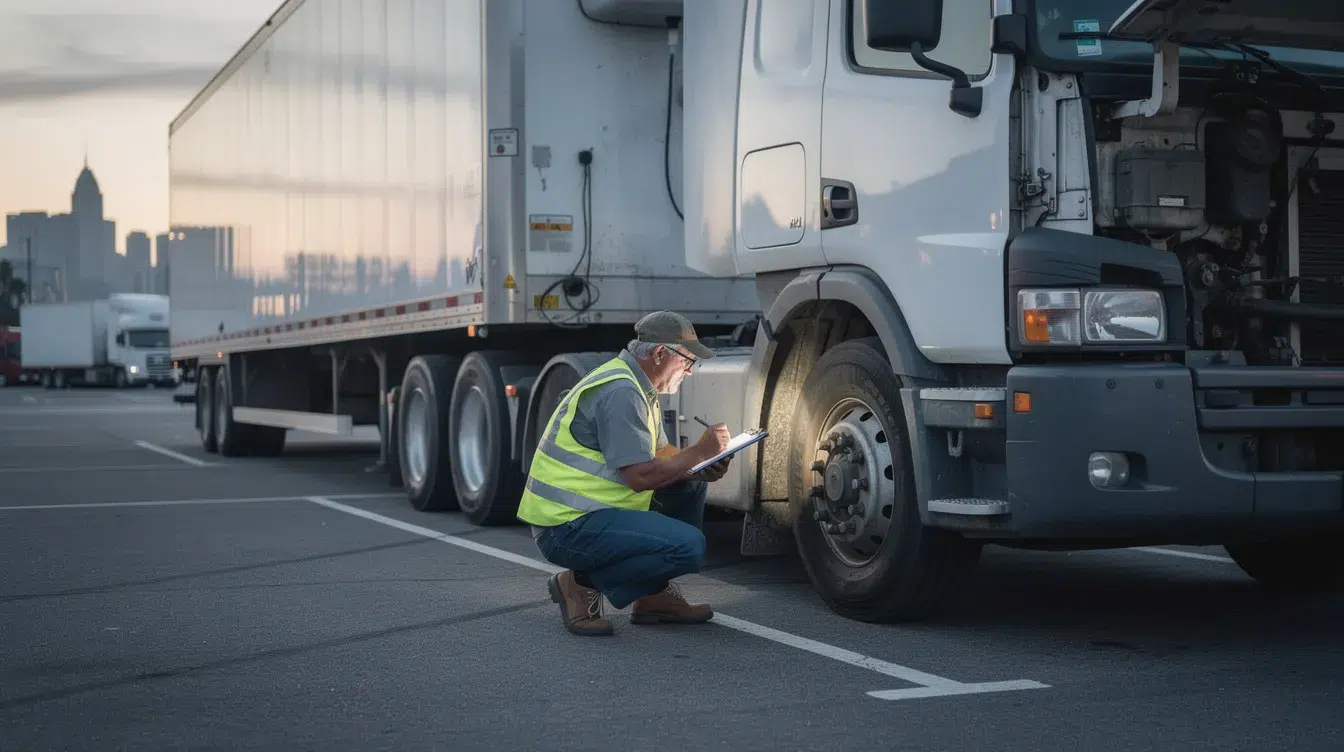
- Vehicle Inspection (Pre-trip, Post-trip, DVIR) – Under Parts 393 and 396, drivers must inspect vehicles before and after trips, document defects, and maintain records. Lighting, tire, and brake violations are among the most common findings during roadside inspections.
- Drug and Alcohol Testing – Governed by 49 CFR Part 40 and Part 382, this training covers who is subject to testing, when tests are required, prohibited conduct, and company policies.
- Hazardous Materials (HazMat) – Required for any employee who prepares, handles, loads, or transports hazardous materials under 49 CFR § 172.704.
- Incident and Accident Reporting – DOT training encompasses safety training for emergency responses and hazard recognition. This includes when to report incidents to PHMSA or FMCSA and how to preserve evidence.
- Carrier Requirements – FMCSA expects carriers to maintain driver files, written drug and alcohol policies under § 382.601, training records for all employees, and supervisor training documentation. These records are routinely reviewed during compliance audits.
DOT Drug and Alcohol Testing Training Basics
DOT drug and alcohol testing for safety-sensitive employees is governed by 49 CFR Part 40 (procedures) and mode-specific rules such as FMCSA’s 49 CFR Part 382 (who is subject and when tests are required). DOT training includes drug and alcohol testing protocols that every driver, supervisor, and program manager needs to understand.
Key training topics include:
- Substances tested – DOT’s standard five-panel drug test screens for marijuana, cocaine, opiates, amphetamines, and PCP. Training covers substances like marijuana, cocaine, and alcohol, plus expanded panels where applicable.
- Testing methods – Urine collection for drugs, breath for alcohol testing, and oral fluid where permitted in pilot programs.
- When tests are required – Pre-employment (controlled substances), random, post-accident (per the criteria in 49 CFR § 382.303), reasonable suspicion, return-to-duty, and follow-up testing.
Training should teach drivers exactly what to expect at a collection site: chain-of-custody procedures, observed collections when required, and how “shy bladder” or “shy lung” scenarios are handled. Refusals and adulterated samples are treated as positive violations under both Part 382 and Part 40, carrying consequences as serious as a confirmed positive result.
DOT requires training for drug and alcohol testing every three years, and this training is more than a regulatory exercise. It helps reduce substance misuse, supports a drug-free workplace, and protects the company during litigation and audits when an accident or violation triggers scrutiny of the company’s alcohol program and drug and alcohol regulations.
Reasonable Suspicion and Supervisor Alcohol Testing Training
DOT requires supervisors of CDL drivers to receive at least 60 minutes of drug and 60 minutes of alcohol misuse training focused on recognizing signs of impairment. This is codified in FMCSA 49 CFR § 382.603, and it is required training before a supervisor can make a reasonable suspicion determination.
Reasonable suspicion training helps supervisors identify impairment on the job. The training must cover:
- Physical indicators – bloodshot eyes, unsteady gait, tremors
- Behavioral indicators – mood swings, erratic behavior, unusual aggression or withdrawal
- Speech indicators – slurred words, incoherent responses
- Performance indicators – inability to perform routine tasks, missed assignments, equipment damage
Supervisors also learn how to properly document their observations and initiate testing without delay.
Example scenario: A supervisor on a night shift in February 2026 notices a driver returning from break with slurred speech and an odor of alcohol. The supervisor documents the specific observations-time, location, what was seen and smelled-before ordering a reasonable suspicion alcohol test. Because the supervisor was trained to record objective details rather than opinions, the documentation holds up during a later grievance hearing.
Strong reasonable suspicion training protects both drivers and the company. Without it, supervisors may either ignore warning signs (creating liability) or act improperly (violating the driver’s rights). Objective, well-documented decisions start with quality training.
Training for Designated Employer Representatives (DERs)
Designated employer representatives are the individuals responsible for managing a company’s DOT drug and alcohol testing program on a day-to-day basis. Designated employer representatives manage drug testing results, communicate with collection sites and the Medical Review Officer (MRO), and arrange reasonable suspicion, post-accident, and return-to-duty tests.
DER training should cover:
- Regulatory timelines – removing a driver from safety-sensitive duty immediately upon receiving a verified positive result or refusal
- Documentation standards – maintaining records that meet 49 CFR Part 40 requirements for retention and confidentiality
- Coordination with Substance Abuse Professionals (SAPs) – understanding the return-to-duty process and follow-up testing schedules
- Clearinghouse reporting obligations – querying and reporting as required under the FMCSA Drug and Alcohol Clearinghouse
Trained DER vs. untrained DER during a 2026 FMCSA audit: A well-trained DER can produce organized records showing timely removal of a driver with a positive test, proper SAP referral, documented return-to-duty process, and all follow-up tests completed on schedule. An untrained DER may have incomplete records, missed reporting deadlines, or gaps in the chain of events-turning what could have been a clean finding into a violation with penalties.
Customized DER training should be tied to the company’s actual policies, state laws, and testing vendors rather than relying on generic slides that don’t reflect real-world fleet operations.
DOT HazMat Training: Overview of Hazardous Materials Requirements
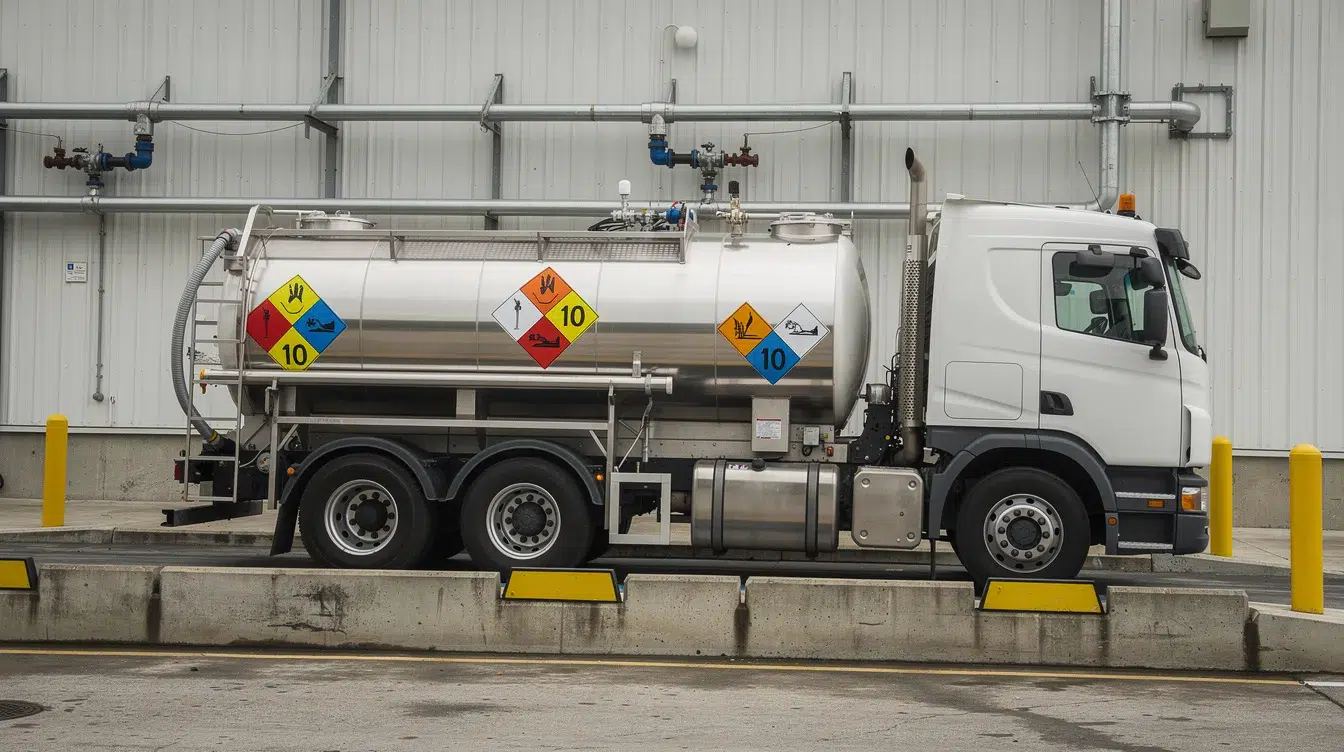
DOT’s definition of a hazardous material, found in 49 CFR 171.8, includes any substance or material that poses an unreasonable risk to health, safety, or property during transportation in commerce. This broad definition covers hazardous substances, marine pollutants, and materials across all nine hazard classes defined by the DOT.
DOT HazMat training is required under 49 CFR 172.704 for “hazmat employees”-anyone who prepares, handles, loads, unloads, or transports hazardous materials. Training must cover topics in 49 CFR 172.704 Subpart H and includes the following core elements:
- General awareness/familiarization – Understanding the overall hazardous materials regulations framework
- Function-specific training – Detailed instruction based on the employee’s specific job function involving hazardous materials
- Safety training – Emergency response procedures, hazard recognition, and methods to protect themselves and the public
- Security awareness training – Security Awareness Training teaches personnel to recognize and report security risks in transportation
- In-depth security training – Required when the company maintains a security plan
HazMat training includes classification, packaging, labeling, and transporting hazardous materials. HAZMAT employees must complete training within 90 days of hire, and DOT HAZMAT training is required every three years. Importantly, employees can perform hazardous functions under supervision before training completion, but only until that 90-day window closes.
All training sessions must be documented with dates, topics, instructor credentials, and test results. This documentation is not optional-it is what regulators look for first during any compliance review involving hazardous materials transportation.
Function-Specific DOT HazMat Training Topics
Function-specific training varies significantly by role. A driver transporting hazardous materials on public highways needs different depth and focus than a warehouse employee handling hazardous material packages or a shipping clerk preparing shipping papers.
Training topics by role typically include:
- Drivers – Proper placarding, vehicle inspection for hazmat loads, emergency response information requirements, en-route security, and communication with dispatch during incidents
- Shipping and receiving staff – Using the Hazardous Materials Table (49 CFR 172.101) to select proper shipping names, hazard classes, UN/NA identification numbers, packing groups, and label codes. Preparing accurate shipping papers and ensuring documentation travels with the shipment
- Warehouse personnel – Safe handling of chemicals and hazardous material packages, proper container and packaging requirements, segregation rules, and marking and labeling compliance
Training should also cover placarding rules for different quantities and hazard classes, emergency response information content, and how these requirements apply across highway, rail, air, and vessel shipments. The DOT defines nine classes of hazardous materials-from explosives and gases to corrosives and miscellaneous dangerous goods-and function-specific training must address the classes your operation actually handles.
The training objectives are to connect regulatory rules to the real-world carrier requirements your team faces daily, not just to read regulations from a slide deck.
Drug and Alcohol Requirements Inside a DOT HazMat Operation
Many HazMat drivers are also subject to DOT drug and alcohol testing requirements, which means hazmat and drug and alcohol training often overlap for the same employee. A single driver may need general awareness hazmat training, function-specific hazmat content, security awareness training, DOT drug and alcohol policy orientation, and company-specific rules-all documented and current.
A practical training plan for a hazmat driver might be structured as:
- HazMat general awareness and familiarization
- Function-specific hazmat training for the materials being transported
- Safety and security awareness modules
- DOT drug and alcohol training (testing protocols, prohibited conduct, consequences)
- Company policies on substance misuse, post-accident procedures, and reasonable suspicion
Carriers transporting hazardous materials face higher liability in accident investigations. If a driver involved in a spill or release tests positive-or if the carrier cannot produce training records showing the driver was properly trained on both hazmat procedures and drug and alcohol regulations-the consequences multiply.
Example: A carrier that transports corrosive liquids (Class 8) and flammable gases (Class 2.1) would build a training matrix around those specific classes. Drivers would receive focused instruction on the emergency response procedures, packaging integrity checks, and placarding rules unique to corrosives and flammables, layered with DOT drug and alcohol program requirements. Every element would be documented separately but tracked in a coordinated system.
Certification Training and Training Cycles
While DOT does not issue a universal “DOT certification,” many carriers use internal and third-party certification training programs to document compliance with specific regulations. The Certified DOT Compliance Manager® certification is highly recognized in the industry and demonstrates a deep understanding of transportation regulations and compliance management.
Common renewal cycles include:
- HazMat training – Every three years under 49 CFR § 172.704, or sooner when regulations change or an employee’s job function involving hazardous materials is modified
- Drug and alcohol supervisor training – Initial training required; refreshers as policies or best practices dictate (many carriers refresh annually)
- DER training – Tied to program updates, vendor changes, and regulatory shifts
- Driver safety training – At least annually, or more frequently based on risk indicators and incident history
Training is also required whenever regulations change. For example, carriers that updated HazMat procedures after 2023 regulatory changes would schedule refresher training before 2026 renewal deadlines.
Specialized training can support professional growth in roles like fleet manager, compliance specialist, and subject matter expert. DOT training can lead to improved career marketability for professionals in supply chain and logistics, making it valuable beyond pure compliance. Most DOT Compliance Managers hold a bachelor’s degree in logistics or safety management, and a DOT Compliance Manager ensures adherence to federal regulations across the organization.
How DOT Training Impacts Roadside Inspections and CSA Scores
Driver behavior and documentation-both directly influenced by training-determine results during roadside inspections. Violations on hours-of-service logs, vehicle condition defects, and hazardous materials placarding or shipping paper errors are among the most frequently cited issues, and most of them trace back to insufficient or inconsistent training.
Consider how training quality connects to CSA BASICs:
- Unsafe Driving – Drivers who receive regular defensive driving training and coaching are less likely to accumulate speeding, following-too-closely, or improper-lane-change violations
- Hours of Service – Drivers trained on ELD use and HOS rules make fewer logging errors, reducing both violations and out-of-service orders
- Vehicle Maintenance – Thorough pre-trip inspection training means defects get caught in the yard, not at a scale or checkpoint
- Hazardous Materials – Proper DOT hazmat training reduces placarding mistakes, missing shipping papers, and package integrity failures
DOT Compliance Managers must manage FMCSA compliance and driver qualification files, and they help maintain a company’s safety rating and avoid costly violations. Proper DOT training helps companies avoid federal fines and operational shutdowns by catching problems before they reach an enforcement officer.
Well-trained drivers consistently produce cleaner inspections and fewer out-of-service orders. That pattern improves both safety outcomes and business reputation over time-but it only happens with training that is repeated, reinforced, and documented.
Documenting DOT Training for Audits and Investigations
DOT training also prepares personnel for federal audits and compliance checks. When FMCSA investigators arrive for a compliance review or focused investigation, training records are among the first items requested.
Regulators typically expect to see:
- Training dates and topics covered
- Instructor credentials or qualifications
- Test scores or assessment results (if applicable)
- Signed rosters, attendance sheets, or electronic acknowledgments
- Completion records showing each employee’s certificate of training
Drug and alcohol and HazMat training records are commonly requested during FMCSA compliance reviews, post-accident litigation discovery, and insurance investigations. A DOT Compliance Manager ensures these records are properly maintained and accessible.
Best practices for documentation include:
- Maintaining separate but coordinated training files for drivers, supervisors, DERs, and hazmat employees
- Ensuring easy retrieval within tight audit timelines (some investigations give 48 hours or less to produce records)
- Showing a pattern of ongoing training and follow-up-not just a single orientation class from several years ago
Documentation should demonstrate that the organization actively manages safety education across every role. A single sign-in sheet from 2022 does not satisfy a 2026 audit.
Common Gaps in DOT Training Programs
Before discussing solutions, it is worth identifying where most fleets fall short. These weaknesses show up repeatedly in compliance reviews, accident investigations, and insurance claims:
- One-time onboarding with no refreshers – Drivers receive orientation training and are never retrained, even as regulations, equipment, and routes change
- Generic online modules – Other courses that ignore the fleet’s actual cargo, routes, and operational risks do not prepare drivers for what they encounter on the road
- Poor coverage of reasonable suspicion – Supervisors receive minimal or outdated training, leaving them unable to act when confronted with potential impairment
- Unspecific hazardous materials content – HazMat training that covers broad concepts without addressing the specific classes and materials the fleet actually handles
- Checkbox training – Drivers sign an attendance sheet, but management never follows up on behavior or performance afterward. The training changes nothing.
These gaps show up in real events: recurring logbook violations from drivers who were never retrained on HOS rule changes, repeated cargo securement issues that trace back to a single generic video watched years ago, or confusion about post-accident drug and alcohol testing steps because the policy was never reviewed after initial hire.
The pattern is consistent: fleets that train once and walk away create unnecessary risk. What they need is not more classes-they need a system.
Designing a DOT Training Plan Around Your Operation
DOT training is tailored based on job responsibilities and sector-specific requirements. A meaningful training plan should define role-based training objectives before mapping required training to specific roles:
- Over-the-road CDL drivers – HOS, ELD, defensive driving, pre-trip inspections, drug and alcohol policy, and hazmat (if applicable)
- Local drivers – Many of the same topics, adjusted for shorter routes and more frequent stops
- Yard personnel – Vehicle movement safety, inspection basics, hazmat handling where relevant
- Hazmat employees – Full 49 CFR 172.704 training suite, tailored to the materials handled
- Dispatchers – HOS awareness, accident reporting protocols, post-accident testing triggers
- Supervisors – Reasonable suspicion training, performance monitoring, corrective action procedures
The plan should account for new-hire training timelines (HazMat training within 90 days, drug and alcohol policy orientation before any safety-sensitive duty) and ongoing training frequencies based on risk.
Use risk indicators-accident history, inspection violations, customer complaints-to determine which topics need deeper coverage or more frequent refreshers. Write the plan down, review it at least annually, and adjust it when carrier requirements or DOT regulations change.
Beyond One-Time DOT Training: How FCG Driver Guard Builds a Driver Safety System
This is where the distinction between training and a training program matters most.
A driver can sit through a safety meeting, sign the attendance sheet, and return to the same habits the next morning. That is training. A training program is something different entirely.
Focused Compliance Group’s Driver Guard Training Program is a structured driver safety and accountability system-not another stand-alone DOT training course. Its mission is captured in four words: Protecting Drivers and Operations.
Driver Guard is built around four components:
- Structured Training – Drivers receive organized, practical training focused on the safety and compliance expectations that affect their actual work
- Ongoing Follow-Up – Training does not end when the class ends. Driver performance and identified issues are followed up on so problems are addressed rather than repeatedly ignored
- Documentation – Training, coaching, retraining, and corrective actions are properly documented so the company can demonstrate that it is actively managing safety
- Accountability – Drivers understand expectations, understand what happens when those expectations are not followed, and receive appropriate coaching, retraining, or corrective action when necessary
The program moves companies away from a reactive safety model-where management waits for a crash, roadside violation, or customer complaint before acting-and toward a repeatable process:
Training → Observation → Follow-Up → Documentation → Retraining/Corrective Action → Continued Accountability
Driver Guard supports stronger DOT compliance and safety management practices. It does not guarantee zero accidents or a specific CSA score. What it does is give companies a system that actually changes driver behavior instead of hoping that one class was enough.
Driver Guard Structured Training: Real-World DOT Content for Drivers
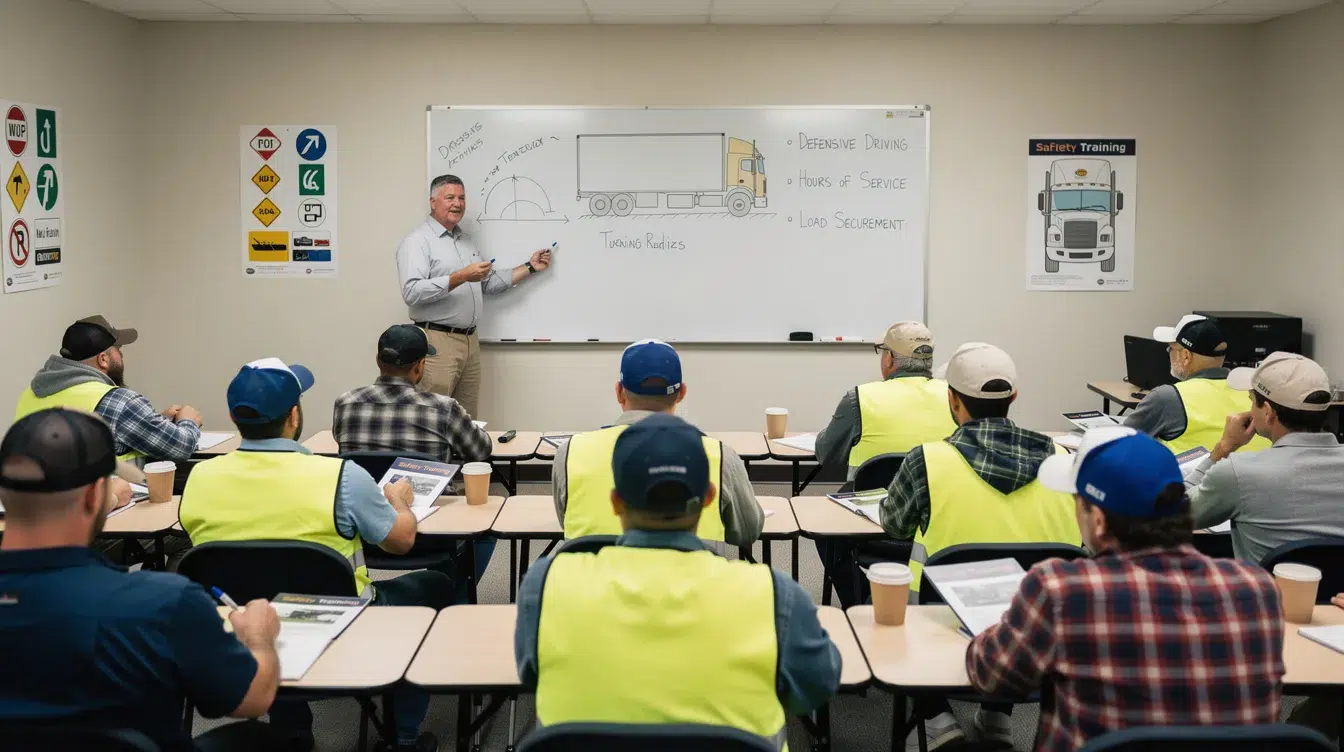
Driver Guard training is delivered by qualified, CVTA-certified CDL training professionals who understand day-to-day trucking operations. These are not instructors reading regulations from a slide deck-they are professionals who have operated vehicles, managed fleets, and dealt with the realities of the road.
Key training focus areas include:
- Defensive driving techniques tied to actual crash scenarios
- Hours-of-service and ELD use, with emphasis on common mistakes that trigger violations
- Pre-trip and post-trip inspections using the fleet’s own equipment
- Cargo securement practices where applicable
- Hazardous materials basics for relevant fleets
- Company-specific drug and alcohol expectations and policies
Where available, sessions use real crashes, inspection reports, and violations from the client’s own fleet to make lessons concrete and memorable. A driver who sees their company’s actual inspection data in a training session pays attention differently than one watching a generic safety video.
The focus is on skills and knowledge that change behavior on the road-not on completing a module at your own pace and forgetting it by the next shift.
Ongoing Follow-Up, Documentation, and Accountability in Driver Guard
The real work of Driver Guard happens after the classroom.
Management and Focused Compliance Group review driver performance data, roadside inspections, and incident reports to identify coaching needs. When a driver is flagged-whether for an inspection violation, a near-miss, or a pattern of HOS errors-the system triggers a response: coaching, retraining, or corrective action, depending on the severity.
Every step is documented. That documentation shows regulators, insurers, and legal teams that the company actively manages safety and DOT-related issues-not just once, but continuously. This is the kind of evidence that matters during an audit or after an accident.
Drivers operate within a consistent accountability structure. They know the expectations, they know the consequences, and they know that follow-up is part of the process-not an afterthought.
Case result: One company working with Focused Compliance Group had been experiencing over six incidents per month before implementing Driver Guard. After the program was in place, that operation experienced only one incident during the following six-month period. Results will vary by operation, but FCG has seen what can happen when companies move from occasional safety meetings to a structured training and accountability system.
How Driver Guard Supports DOT Drug, Alcohol, and HazMat Compliance
Driver Guard can be aligned with a company’s existing DOT drug and alcohol and HazMat programs, reinforcing policy understanding and day-to-day behavior where it matters most-in the cab and at the loading dock.
Training modules within Driver Guard can reinforce:
- When post-accident alcohol testing is required and the driver’s responsibilities during the process
- What happens during random testing and why cooperation matters
- Safe behavior around hazardous materials handling, security procedures, and emergency protocols
- How drug and alcohol regulations apply to the driver’s specific role and responsibilities
Driver Guard does not replace required regulatory training. It does not substitute for DER-specific content, hazmat function-specific training under 49 CFR 172.704, or formal supervisor reasonable suspicion training. What it does is strengthen how drivers apply that training in the field-leading to better roadside behavior, cleaner inspections, improved log management, and fewer hazmat shipping paper errors.
The goal is to connect the regulatory education drivers receive to the decisions they make every day.
Choosing the Right DOT Training Partner
Not all training providers deliver the same quality or depth. When evaluating a DOT training partner, consider:
- Real-world trucking experience – Does the provider understand what drivers actually deal with, or are they reading from a textbook? A subject matter expert with fleet experience will deliver different results than a general education vendor.
- Customization – Can the provider tailor content to your cargo, routes, and operational risks? Training for a flatbed carrier hauling steel is not the same as training for a tanker fleet transporting chemicals.
- Ongoing support – Does the provider offer a system of follow-up, coaching, and retraining, or just a one-time class? Compare providers that only sell online modules with programs like Driver Guard that surround the driver with training and accountability.
- Documentation and audit readiness – Does the provider help you build the records regulators want to see, or does the paperwork stop at a certificate of completion?
- Team approach – The right partner works with your safety team, not around them. Training should make your people stronger, not dependent on an outside vendor.
Driver Guard pricing is customized to the operation. There is no flat fee because each program is tailored to fleet size, number of drivers, number of locations, hazardous material exposure, identified risks, and the scope of training and follow-up required. Expect a tailored proposal, not a one-size-fits-all price.
Focused Compliance Group is an operations-focused partner, not a commodity training vendor. FCG understands what drivers actually deal with on the road, and what management has to deal with when something goes wrong. Driver Guard connects those two sides.
Getting Started with Driver Guard and Enhancing Your DOT Training Program
If you are responsible for safety at a motor carrier, here are practical next steps:
- Review recent accidents and inspection reports – Look for patterns. Are the same violations appearing? Are the same drivers involved? Are there gaps in post-accident procedures?
- Inventory current DOT training and documentation – Can you produce training records for every driver, supervisor, and DER within 48 hours if asked? Do those records show ongoing training or just a single orientation from years ago?
- Identify priority gaps – Define the highest-risk issues and set training objectives for the areas creating the most risk: drug and alcohol program weaknesses, HazMat training that hasn’t been refreshed, driver behavior issues that go unaddressed, or supervisor training that was never completed.
- Contact Focused Compliance Group – Discuss your operation, driver count, cargo types, and current pain points so an appropriate Driver Guard program can be designed around your fleet.
Stop hoping your drivers remember the last safety meeting. Build a system around them. Talk with Focused Compliance Group about creating a Driver Guard program for your operation.
Structured, ongoing DOT training is one of the most effective investments a carrier can make to reduce risk, improve safety culture, and maintain access to the resources needed for compliant operations. The difference between a fleet that trains once and hopes for the best and one that builds a system around its drivers shows up in every inspection, every audit, and every mile driven in 2026 and beyond.
FAQ: Practical Questions About DOT Training and Driver Guard
How often do my drivers need DOT drug and alcohol and HazMat training?
DOT requires HazMat training at least every three years and within 90 days of assignment to a hazardous material function under 49 CFR § 172.704. DOT drug and alcohol rules require initial training plus refreshers when policies, regulations, or operations change. Many carriers choose annual or semiannual driver safety meetings and structured programs like Driver Guard to keep expectations fresh and well-documented. Supervisors must receive at least 60 minutes of drug and 60 minutes of alcohol reasonable suspicion training, with periodic refreshers strongly recommended to register current indicators and maintain skills.
Does Driver Guard replace my regulatory DOT training requirements?
No. Driver Guard is designed to complement, organize, and strengthen DOT training-not replace mandatory elements such as hazmat function-specific training or formal DER training. Focused Compliance Group can help integrate required topics into a broader driver safety system so that training is consistent, practical, and properly documented. Fleets should continue to meet all specific requirements in 49 CFR Parts 40, 172.704, 382, and related sections while using Driver Guard to manage day-to-day behavior and accountability across the operation.
What fleets benefit most from a structured program like Driver Guard?
Ideal candidates include carriers experiencing recurring incidents, frequent roadside violations, hazmat compliance challenges, or growth that has outpaced their current safety processes. Both small fleets with fewer than 20 drivers and larger multi-terminal operations can benefit, because Driver Guard is scaled to match the company’s size and risk profile. Focused Compliance Group customizes the program for operations such as regional trucking, long-haul, dedicated contract carriage, or mixed hazmat and non-hazmat fleets.
How is Driver Guard priced and how long does it take to implement?
There is no flat price. Each Driver Guard program is tailored to fleet size, number of locations, driver count, hazardous material exposure, and the depth of training and follow-up required. Implementations often begin with a review of incidents and compliance history, followed by an initial training phase and then scheduled follow-up and accountability steps. Contact Focused Compliance Group directly to discuss timelines and a program design that fits your calendar and operational constraints.
Can Driver Guard help us prepare for a DOT audit or focused investigation?
While no program can guarantee a specific audit outcome, Driver Guard helps companies improve and document their safety management practices-which are central in many DOT reviews. Better documentation of driver training, coaching, corrective actions, and hazmat and drug and alcohol programs can make it easier to demonstrate proactive management to investigators. Fleets facing an upcoming audit should combine improved training with file reviews, policy updates, and corrective action plans for the strongest position possible.