
Why DOT Drug Testing Is a Program, Not Just a Drug Test
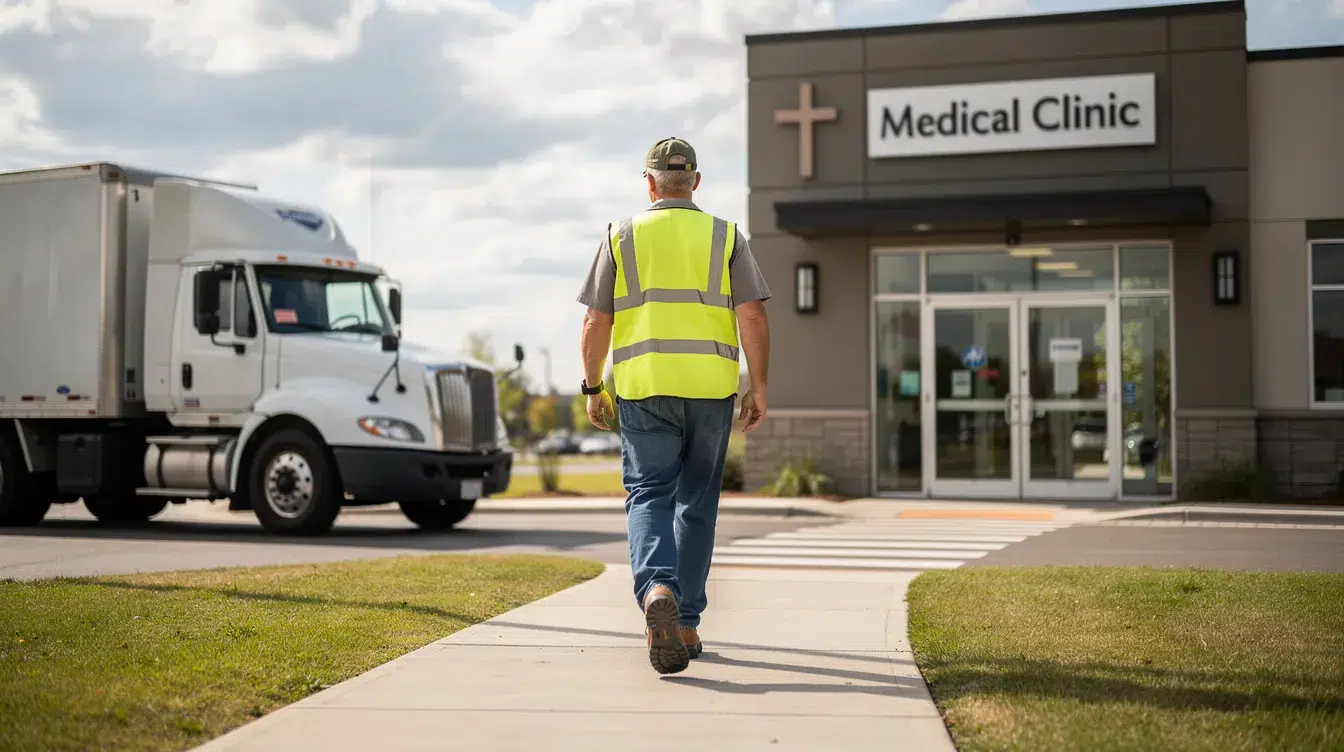
Most trucking companies have a clinic where they send drivers for a drug test. That part is straightforward. The part that causes audit findings, fines, and compliance gaps is everything around that test.
DOT drug testing is a federally mandated screening program for safety-sensitive employees that operates under DOT requirements. It is not a single event. It is an ongoing set of obligations that includes six different test reasons, written policies, supervisor training, Clearinghouse reporting, and records that must be retained for up to five years. DOT regulations require specific types of testing including pre-employment, random, reasonable suspicion, post-accident, return-to-duty, and follow-up testing.
Consider a 20-truck carrier that “has a place to send drivers for tests.” The clinic collects specimens and sends them to a lab. But who runs the random selections each quarter? Who decides whether a 2 a.m. accident triggers DOT post-accident testing? Who runs the annual Clearinghouse queries on every active driver? Who keeps the supervisor training records? In most small fleets, the answer is either “one person who does it from memory” or “nobody, specifically.”
FMCSA rules for CDL drivers in safety-sensitive functions live primarily in two places: 49 CFR Part 382 defines who is tested, when, and what types of tests are required. 49 CFR Part 40 governs how those tests are conducted, from chain-of-custody protocols during specimen collection to the role of the medical review officer who reviews test results.
Drug and alcohol testing under DOT includes both drug testing and alcohol testing, and the two operate on slightly different triggers and timing rules to reduce the presence of prohibited substances in safety-sensitive work. A compliant DOT drug and alcohol program covers all of these elements together.
FCG works with motor carriers as a DOT compliance and safety partner, helping coordinate the program elements that sit between the employer and the collection site. This article breaks down what those elements are and where carriers most often fall short.

Who Actually Has to Follow FMCSA DOT Drug and Alcohol Testing Rules?
FMCSA’s drug and alcohol testing rules apply to employers and drivers who operate commercial motor vehicles requiring a commercial driver’s license (CDL) and who perform safety-sensitive functions. Safety-sensitive workers must submit to testing when requested under valid circumstances defined by federal regulations.
The following employers and drivers are covered:
- Motor carriers operating commercial motor vehicles requiring a CDL in interstate commerce.
- Many intrastate carriers if their state has adopted FMCSA drug and alcohol rules for CDL holders.
- Owner operators who are both employer and driver for compliance purposes.
- Private fleets and for-hire carriers that operate CDL-required vehicles.
- Full-time, part-time, seasonal, intermittent, and backup CDL drivers performing safety-sensitive functions.
Under 49 CFR 382.107, safety-sensitive functions include driving a CMV, waiting to be dispatched, inspecting, servicing, or performing maintenance on a CMV, and loading or unloading where it affects safe operation. Every minute a CDL driver is in those functions, FMCSA rules apply.
DOT drug and alcohol testing rules are different from a company’s own non-DOT drug test policy. Non-CDL employees (warehouse staff, office workers, mechanics without CDLs) should not be included in a DOT random pool. They can be covered under a separate non-DOT drug and alcohol testing program, but mixing the two creates compliance violations.
If a driver works for multiple motor carriers or falls under more than one DOT agency (for example, the Pipeline and Hazardous Materials Safety Administration), each employer’s responsibilities remain independent. Testing obligations do not “transfer” because another carrier is also running a program.
Not sure whether your current testing setup covers the full DOT program? FCG can help review what you have in place and identify any gaps.
Overview of Employer Responsibilities Under 49 CFR Part 382
49 CFR Part 382 Subpart C outlines the tests employers must require. Subpart D addresses handling positive results, refusals, and violations. Together, they create the framework that every motor carrier conducts its DOT drug and alcohol program within under federal motor carrier safety standards and Part 382 responsibilities.
Even when using a C/TPA or clinic, employers must manage the following:
- Implement and maintain a DOT-compliant drug and alcohol testing policy and education materials.
- Ensure pre-employment drug tests and Clearinghouse queries are done before a CDL driver performs safety-sensitive work.
- Enroll all CDL drivers in a compliant DOT random drug and alcohol testing program and meet the current annual random rates (50% drug, 10% alcohol for FMCSA as of 2026).
- Make decisions and arrangements for post-accident testing when criteria are met.
- Ensure supervisors are trained to make reasonable suspicion testing determinations.
- Remove drivers from safety-sensitive functions after positive tests, refusals, or certain violations and manage return-to-duty and follow-up testing per Substance Abuse Professional recommendations.
- Register with and manage FMCSA Clearinghouse obligations (queries and reporting).
- Maintain required drug and alcohol testing records and be prepared for audits or compliance reviews.
Refusing to take a required test is treated as a violation of DOT rules, and if a driver does fail a required DOT drug test, the same removal and return-to-duty process applies. Positive tests result in immediate removal from safety-sensitive functions until specific return-to-duty criteria are met.
An employer can delegate many administrative tasks to a C/TPA such as FCG, but cannot legally delegate ultimate responsibility for compliance. If the program fails an audit, FMCSA looks to the motor carrier.
Pre-Employment DOT Drug Testing and Onboarding Responsibilities
DOT regulations mandate pre-employment drug testing for safety-sensitive positions. A negative pre-employment test result is required before starting work. Pre-employment drug tests are conducted during the hiring process, and no CDL driver may perform safety-sensitive functions until the employer has a verified negative result on file.
The test must be a DOT urine drug test following 49 CFR Part 40 procedures and Part 382 requirements. DOT drug tests screen for five specific substance classes under federal guidelines: marijuana, cocaine, amphetamines, opioids, and phencyclidine. Oral fluid testing is also authorized as an alternative under certain conditions, though urine remains the standard. Employers must use HHS-certified laboratories for drug testing, and DOT requires strict chain-of-custody protocols during specimen collection.
Pre-employment alcohol testing is optional under DOT rules. If the employer chooses to do it, they must apply it consistently to all applicants for the same job category.
Practical steps an employer must manage at pre-hire:
- Provide the applicant with the company’s DOT drug and alcohol testing policy and required educational materials per 49 CFR 382.601.
- Schedule and document a negative DOT pre-employment drug test result before placing the driver in a safety-sensitive position.
- Obtain the driver’s consent and run a full FMCSA Clearinghouse query for pre-employment.
- Request prior employer DOT drug and alcohol testing history (including violations) from the past three years where still required in addition to Clearinghouse checks.
Sending a driver to a clinic is not enough on its own. The employer must confirm the clinic is using DOT custody and control forms, approved laboratories certified under the Department of Health and Human Services standards, and that a medical review officer reviews all test results as required by Part 40.
If an applicant has an unresolved “prohibited” status in the Clearinghouse, the employer cannot allow them to perform safety-sensitive functions until the SAP process, return-to-duty testing, and follow-up requirements are complete.
FCG can coordinate pre-employment DOT drug tests and optional alcohol testing, ensure Clearinghouse queries are run and documented, and provide templates for driver onboarding checklists and policy acknowledgments.
DOT Random Drug and Alcohol Testing: Employer Duties, Not Just a List of Names
DOT random testing is one of the most audited parts of any drug and alcohol program. FMCSA sets minimum annual testing rates and expects employers to produce documentation proving selections were made, tests were completed, and the process followed the rules.
The minimum annual random drug testing rate set by the Federal Motor Carrier Safety Administration is 50 percent. Employers must test 50% of their random pool for drugs annually. The alcohol testing rate is 10%. These rates were confirmed for 2026 by the DOT Office of Drug and Alcohol Policy and Compliance and have remained stable because violation rates have stayed below the thresholds that trigger increases.
Random drug tests must be unannounced and spread throughout the year. Here is what employers are specifically responsible for:
- Random testing pools must include all CDL drivers at all times, including part-time, casual, and seasonal drivers. No selective exclusion.
- The selection process must be truly random, with each driver having an equal chance of selection each draw during every selection period.
- Selections must be spread reasonably throughout the entire calendar year and across all shifts and locations.
- Drivers must report immediately for testing after selection. Drivers must submit to random tests immediately after selection; delays or refusals carry the same consequences as a positive result.
- Tests must be completed within the selection period, and the employer must document reasons if a selected driver is not tested.
Employers cannot mix non-CDL employees into the DOT random pool. Non-DOT drug and alcohol testing must use separate pools and records.
Owner operators and single-driver companies must participate in a DOT random consortium. They cannot manage their own standalone pool under FMCSA rules.
A C/TPA or consortium like FCG typically handles the random testing program by running the random selection process, issuing notices to the employer for selected drivers, coordinating with approved collection sites and laboratories certified for DOT testing, and tracking completion with summary reports and compliance documentation.
Common pain points for carriers managing random testing internally: confusion about timing windows, missed tests because a driver was on the road, incomplete documentation of selections, and drivers who are never selected across multiple quarters, which raises audit questions.
Post-Accident DOT Drug and Alcohol Testing: When It Is and Isn’t Required
Not every crash or fender-bender requires DOT post-accident testing. The requirements are specific, outlined in 49 CFR 382.303, and misapplying them creates compliance problems in both directions.
DOT regulations require immediate testing after an accident involving a CMV when certain criteria are met. The three trigger scenarios:
- Fatality involving the CMV: Always requires drug and alcohol tests for the surviving CDL driver(s), regardless of citation.
- Bodily injury with immediate medical treatment away from the scene: Testing required if the driver receives a citation for a moving traffic violation.
- Disabling damage to any vehicle requiring a tow: Testing required if the CDL driver is cited for a moving violation.
Timing requirements are strict:
- Alcohol test should be administered within 2 hours of the accident. If it cannot occur within 2 hours, the employer must document the reason. If 8 hours pass, the employer must stop attempting the alcohol test and document why.
- Drug test should be administered as soon as possible within 32 hours of the accident. Past 32 hours, stop attempts and document.
Employer responsibilities around post-accident testing:
- Having a clear post-accident decision tree or checklist in the vehicle accident packet so the on-call manager does not have to guess at 2 a.m.
- Training managers or on-call staff to decide quickly whether DOT post-accident testing applies based on the criteria above.
- Documenting in writing any time a test could not be performed within required time frames and keeping those records for audit.
One common mistake: defaulting to “test for every accident.” This can create non-compliant DOT alcohol tests (for example, testing long after the safety-sensitive function ended) and can dilute testing data. A company may still choose non-DOT testing under its own policy for incidents that do not meet DOT triggers.
FCG can provide practical post-accident flowcharts and wallet cards, coordinate post-accident drug and alcohol testing through mobile collectors or urgent collection sites, and help document non-test situations properly for FMCSA audits.
Reasonable Suspicion Drug and Alcohol Testing and Supervisor Training
Reasonable suspicion testing is triggered by specific, contemporaneous, articulable observations concerning a driver’s appearance, behavior, speech, or body odors that indicate probable drug or alcohol use. This is not a hunch. It requires trained observation and documentation.
Employer duties around reasonable suspicion:
- Ensuring at least one supervisor (or person in a comparable position) who oversees CDL drivers has completed required training before making any reasonable suspicion determination.
- Documenting observations leading to a reasonable suspicion test, including date, time, and specific behaviors observed. This documentation must be completed within 24 hours of the observed behavior or before test results are released, whichever comes first.
- Removing the driver from safety-sensitive functions and arranging the appropriate DOT drug or alcohol test promptly.
Under 49 CFR 382.603, supervisor training must include at least 60 minutes on the physical, behavioral, speech, and performance indicators of probable drug use and at least 60 minutes on the indicators of probable alcohol misuse. That is 120 minutes minimum, and it must be completed before supervisors can make reasonable suspicion decisions.
Drug and alcohol reasonable suspicion rules differ:
- Alcohol testing is limited to during, just before, or just after performing safety-sensitive functions. Observations from hours off-duty do not count.
- Drug testing can be ordered based on reasonable suspicion regardless of time since last duty, provided the observations are recent and credible. Observations can include chronic or withdrawal effects for controlled substances.
Common employer pain points with reasonable suspicion:
- Supervisors unsure whether they “have enough” to order a test.
- Lack of written documentation forms to support a reasonable suspicion decision.
- Delays in testing that weaken the case or create compliance issues.
FCG provides live or online reasonable suspicion supervisor training specific to FMCSA, supplies documentation templates and checklists for observations and decisions, and helps coordinate quick access to DOT-qualified drug and alcohol tests when a reasonable suspicion event occurs.
Return-to-Duty and Follow-Up Testing: What Employers Must Do After Violations
A positive DOT drug test, an alcohol test at or above 0.04, or a refusal triggers removal from safety-sensitive functions and the DOT return-to-duty process. Drivers must be removed from safety-sensitive functions after a positive test. This is governed by 49 CFR Part 40 Subpart O and 49 CFR Part 382 Subpart B.
Employer responsibilities when a driver has a DOT drug or alcohol violation:
- Immediately remove the driver from safety-sensitive work.
- Provide the driver with a list of DOT-qualified Substance Abuse Professionals. Employers must provide resources for resolving drug abuse problems, including SAP referral information.
- Not allow the driver to perform safety-sensitive functions again until the SAP has evaluated the driver, recommended treatment or education, and the driver has completed those recommendations.
Drivers must complete a treatment program before return-to-duty testing. A return-to-duty test must be passed before resuming duties. Return-to-duty tests are performed under direct observation. Drivers must pass a return-to-duty test after a violation.
The difference between RTD and follow-up testing:
- RTD test: A single, directly observed drug test (and sometimes an alcohol test if alcohol misuse was involved) the driver must pass before resuming safety-sensitive duties.
- Follow-up testing: A series of unannounced, directly observed tests scheduled by the SAP and carried out by the employer. At least six follow-up tests are required in the first year. Follow-up testing can be prescribed for up to five years, depending on the SAP’s assessment.
The SAP designs the follow-up testing plan, but the employer is responsible for:
- Making sure the tests are actually conducted as ordered.
- Keeping detailed records of all follow-up tests and results.
- Ensuring follow-up tests are in addition to any random tests. They do not replace randoms.
Clearinghouse implications are direct. Employers (or their C/TPA in certain cases) must report violations, RTD results, and completion of follow-up testing to the FMCSA Drug and Alcohol Clearinghouse. Other carriers will see a driver’s unresolved prohibited status and outstanding follow-up testing requirements when they run queries.
FCG can coordinate RTD and follow-up test scheduling in line with SAP instructions, track completion of required tests and report to the Clearinghouse where the rules allow, and help employers document RTD and follow-up activities for potential investigations or audits.
You don’t have to manage pre-employment, random, post-accident, and follow-up testing coordination alone. FCG can centralize these processes so nothing falls through the cracks.
FMCSA Drug and Alcohol Clearinghouse: Employer Responsibilities
The FMCSA Drug and Alcohol Clearinghouse is a federal database of CDL driver DOT drug and alcohol violations, RTD status, and follow-up testing plans. It has been operational since January 2020, and FMCSA auditors routinely check whether employers are meeting their Clearinghouse duties.
Employer Clearinghouse responsibilities:
- Register the company in the Clearinghouse and designate any C/TPAs that will act on the employer’s behalf where allowed.
- Run a full pre-employment query (with electronic driver consent) before allowing a driver to perform safety-sensitive functions for the first time.
- Run at least one limited query annually on each currently employed CDL driver. If a limited query returns a hit, the employer must conduct a full query within 24 hours and cannot allow the driver to perform safety-sensitive functions until the full query confirms no prohibitions.
- Report positive drug tests, alcohol violations at or above 0.04, refusals, actual knowledge violations, and negative RTD test results within required time frames.
While a C/TPA like FCG can help with many Clearinghouse tasks (running queries, submitting certain reports if designated), FMCSA rules still hold the employer legally responsible for making sure Clearinghouse duties are completed.
Common pain points:
- Confusion over the driver consent process for full queries.
- Missed annual queries on existing drivers, one of the most common audit findings.
- Multiple people in a company each doing a piece of Clearinghouse work, with no single owner tracking completion.
FCG can set up and maintain Clearinghouse accounts, run queries on behalf of employers as a designated C/TPA, and provide reminders and reports to ensure no driver is missed in annual queries.
Required Policies, Education, and Driver Notices
FMCSA requires more than testing. Under 49 CFR 382.601, employers must provide written policies and educational materials to every CDL driver subject to DOT drug and alcohol testing rules.
The written DOT drug and alcohol policy or educational materials must include:
- The types of DOT drug and alcohol tests (pre-employment, random, post-accident, reasonable suspicion, return-to-duty, follow-up).
- The circumstances under which each test will be required.
- The substances tested for (DOT 5-panel urine drug test covering five substance classes: marijuana, cocaine, amphetamines, opioids, and phencyclidine, plus alcohol BAC thresholds).
- Procedures for testing, including employee rights and responsibilities.
- Consequences of positive tests, refusals, or violations, including removal from safety-sensitive duties and the SAP/RTD process.
- The employer’s obligation to share information with the Clearinghouse and prior employers where applicable.
Employers must provide drivers with a copy of the policy or equivalent educational materials. Employers should obtain a signed acknowledgment from drivers and maintain it in their files.
A DOT-required policy is distinct from any broader company drug and alcohol testing policy. DOT-related content must be clearly identified and should not be buried inside a general employee handbook without distinction.
FCG can supply FMCSA-compliant policy templates tailored to the carrier’s operations, review existing policies for alignment with 49 CFR Part 382, and provide educational materials and handouts for drivers during orientation.
Recordkeeping and Documentation: What You Must Keep and For How Long
Strong recordkeeping is what allows a carrier to prove compliance during an FMCSA audit or new entrant safety audit. Records are required under 49 CFR 382.401, and the retention periods vary by record type.
|
Record Type |
Examples |
Minimum Retention Period |
|---|---|---|
|
Positive drug/alcohol test results, SAP reports |
Verified positive results, refusal documentation |
5 years |
|
Negative and canceled test results |
Verified negative drug tests, alcohol results below 0.02 |
1 year |
|
Random selection records and test completion logs |
Selection lists, dates, completion proof |
2 years |
|
Supervisor training records |
Reasonable suspicion training certificates |
2 years |
|
Clearinghouse query records |
Query confirmations, responses |
3 years |
|
Annual MIS reports (if required) |
Summary data submitted to FMCSA |
5 years |
Employers must keep:
- All DOT drug and alcohol test results and related documents (including refusals and shy bladder/shy lung notes).
- Random selection lists, selection dates, and proof of completed or excused tests.
- Supervisor training records for reasonable suspicion training.
- Policy acknowledgments signed by drivers.
- Clearinghouse query and report confirmations.
- Any post-accident testing decision documentation, including when testing was not performed.
Even when a C/TPA or testing provider stores copies, the motor carrier must be able to access and produce these records quickly if FMCSA requests them.
A practical audit-prep approach: maintain a dedicated DOT drug and alcohol testing file or digital folder per driver, plus a program-level folder with random pool records and policy documents.
FCG can centralize records from multiple clinics and labs, provide organized audit-ready binders or digital portals, and conduct internal or mock audits focused on drug and alcohol recordkeeping.
Understanding the Roles: Employer vs. Clinic vs. C/TPA
Collection sites, laboratories, and C/TPAs are service agents. FMCSA holds the motor carrier responsible for the DOT drug and alcohol testing program.
|
Task / Responsibility |
Employer |
Clinic / Collection Site |
C/TPA / Consortium |
|---|---|---|---|
|
Develop DOT policy |
Owns and distributes |
No |
May provide templates |
|
Enroll drivers in random program |
Provides driver roster |
No |
Manages pool enrollment |
|
Run random selections |
Ensures compliance |
No |
Runs selections |
|
Perform specimen collection |
Sends driver to site |
Yes |
Coordinates scheduling |
|
Run Clearinghouse queries |
Legally responsible |
No |
Can run if designated |
|
Store compliance records |
Must have access |
Keeps collection records |
May store program records |
|
Provide supervisor training |
Ensures completion |
No |
May deliver training |
|
Make post-accident testing decisions |
Makes the call |
No |
May advise |
|
Coordinate RTD/follow-up scheduling |
Ensures completion |
Collects specimen |
Can coordinate scheduling |
A DOT drug testing consortium is a pooled random testing group, often administered by a C/TPA, used by small carriers and owner operators to meet DOT random drug and alcohol testing requirements efficiently. Owner operators must, by rule, belong to a consortium for random testing. They cannot oversee their own random pool.
Employers must select qualified service agents (clinics, labs, MROs, C/TPAs), monitor service agent performance, and take corrective action if service agents do not comply with DOT rules, including changing providers.
FCG positions itself as a hands-on C/TPA and compliance partner that integrates testing logistics, random testing program management, Clearinghouse support, and recordkeeping into one managed program. FCG functions as an extension of the carrier’s safety and compliance team, not a replacement for the employer in the eyes of FMCSA.

When and Why It Makes Sense to Outsource Program Administration
For fleets with 1 to 100 trucks, the reality often looks like this:
- One person in safety or HR juggling driver qualification files, hours of service, and drug and alcohol testing.
- Random testing spreadsheets that depend on one employee’s memory.
- Confusion over post-accident rules at 2 a.m.
Partnering with a C/TPA or compliance firm like FCG is especially helpful for:
- New entrants that need a complete DOT drug and alcohol program set up quickly and correctly.
- Small and midsize fleets where there is no full-time compliance management department.
- Carriers that use multiple clinics across states and struggle to keep records consistent.
- Owner operators with one or a few hired drivers who cannot maintain a standalone DOT random pool.
Outsourcing program administration can include enrollment in a DOT random consortium and management of DOT random drug and alcohol testing, coordination of pre-employment, post-accident, reasonable suspicion, return-to-duty, and follow-up tests through vetted providers, Clearinghouse support including reminders and running queries when authorized, and policy development, supervisor training, and centralized recordkeeping.
Using a C/TPA or compliance partner does not remove the employer’s legal responsibilities. But it lowers the risk of missing a DOT requirement and frees up internal staff for operating the business.
Already have a clinic or random program? FCG can review whether all regulatory pieces are being covered. Think of it as a program checkup, not a sales pitch.
Putting It All Together: A Practical Employer Checklist
Use this list as a quick self-audit. If any item is unclear or unchecked, your company has a DOT drug and alcohol program gap.
- Policy & Education: Do we have a current DOT drug and alcohol policy meeting 49 CFR 382.601? Have all CDL drivers received and acknowledged it?
- Pre-Employment: Are we completing DOT pre-employment drug tests and Clearinghouse full queries before safety-sensitive work? A pre-employment drug test is required before starting a DOT position.
- Random Testing: Are all CDL drivers in the DOT random pool? Are we meeting FMCSA’s 50% drug and 10% alcohol rates and documenting selections throughout each calendar year?
- Post-Accident: Do we have clear procedures and decision tools to know when DOT post-accident testing is required, and are we documenting outcomes when tests are and are not conducted?
- Reasonable Suspicion: Are our supervisors trained per 382.603 (60 minutes on drugs, 60 minutes on alcohol), and do we have documentation forms for observations?
- RTD & Follow-Up: Do we know what to do after a positive or refusal, and who tracks SAP-directed follow-up tests? Drivers must complete a treatment program before returning to duty.
- Clearinghouse: Are we consistently running pre-employment and annual queries and reporting violations?
- Recordkeeping: Can we quickly produce required records for the past 1, 2, and 5 years if FMCSA asks?
If any of these boxes are unclear, the company has a program gap, even if it has a place to send drivers for a drug test. A clinic can perform a test. A compliance partner can help manage the program around the test.
Contact FCG to discuss building, reviewing, or managing your DOT drug and alcohol testing program, whether you are starting from scratch or already have a clinic relationship in place.
FAQ
These FAQs address common employer questions about DOT drug and alcohol testing requirements that go beyond the main sections above.
Do I have to drug test every accident involving one of my trucks?
No. DOT post-accident drug and alcohol testing is only required when specific criteria in 49 CFR 382.303 are met: a fatality, a tow-away with a moving violation citation issued to the driver, or an injury requiring immediate off-scene medical treatment combined with a moving violation citation. Minor incidents with no injuries, no tow, or no citation issued to the CDL driver generally do not trigger DOT testing. A company may still choose non-DOT testing under its own policy for those incidents.
Can I use the same drug test program for my warehouse staff and my CDL drivers?
CDL drivers subject to FMCSA rules must be in a dedicated DOT random pool, and their tests must follow DOT procedures with DOT custody and control forms, HHS-certified labs, and MRO review. Warehouse or non-CDL staff may be covered under a separate non-DOT policy and random pool. Mixing DOT and non-DOT employees in the same random testing pool is a compliance violation.
Does an employer have to use a DOT drug testing consortium or C/TPA?
Owner operators who are a single CDL driver and also the employer are required to participate in a consortium for DOT random testing. Larger carriers may run their own random pools internally or use a C/TPA to administer them. Even when using a consortium, the employer remains responsible for ensuring tests are completed and records are maintained.
How often are CDL drivers randomly drug tested under DOT rules?
FMCSA currently requires that, over each calendar year, at least 50% of the average count of CDL drivers in the random pool receive a DOT random drug test and at least 10% receive a DOT alcohol test. This does not mean every driver will be tested each year, but every driver must remain in the pool and have an equal chance of selection during every selection period.
Is sending drivers to a clinic enough to pass a DOT audit?
Having a clinic or collection site is only one part of compliance. FMCSA auditors will review written policies, random selection records, post-accident decisions, supervisor training documentation, Clearinghouse activity, and recordkeeping with proper retention periods. A testing location without a managed program around it is a common gap. FCG helps carriers close that gap by coordinating the full set of employer responsibilities that occur before, after, and between tests.