
Why Internal Safety Teams Are Under More Pressure Than Ever
Between 2016 and 2026, DOT and FMCSA regulations have layered on complexity at a pace most safety departments were not staffed to absorb. The ELD mandate, the Drug & Alcohol Clearinghouse (and the Clearinghouse II rule that took effect November 18, 2024), the National Registry II electronic medical certificate transmission rule that went live June 23, 2025, and a reorganized SMS methodology approved in late 2024 all added new processes, deadlines, and documentation requirements. At the same time, customer contracts increasingly demand verified safety programs, and insurance underwriters run deeper reviews before quoting premiums.
If you are a safety director, compliance manager, fleet manager, HR manager, or operations leader at a motor carrier, construction company, waste company, or contractor fleet, you already know this pressure firsthand. Most companies reading this article are not starting from zero. You have someone responsible for safety and DOT compliance. You have policies, files, and training programs in place. The question is whether your current resources can keep pace with the workload.
Third-party safety and compliance consulting exists to add outside expertise and bandwidth to an existing safety department. Hiring a transportation safety consultant or DOT compliance consultant should not mean replacing internal safety leadership. It should create an extension of your safety department and compliance team, giving your people more tools, more time, and a second set of eyes on the work that matters most.

Third-Party Compliance Should Support Your Team, Not Replace It
Your internal team knows your drivers by name. They understand which routes cause the most fatigue, which customers have strict site-access rules, and which pieces of equipment need extra attention. That company-specific knowledge is irreplaceable, and it should remain the center of safety management.
What an outside FMCSA compliance consultant adds is complementary: up-to-date regulatory knowledge across multiple areas of DOT safety compliance, experience gained from working with a variety of carriers and fleet types, and resources like templates, checklists, and training materials refined over dozens of engagements. Third-party safety companies provide external expertise in workplace safety compliance that fills gaps the internal team may not have time or bandwidth to cover. Think of the relationship as collaborative safety management, where the consultant functions as an additional compliance resource rather than a replacement for your safety manager.
Decisions about drivers, equipment, hiring, and discipline still belong to your company’s leadership. The outside partner supplies information, options, and implementation support. A good outsourced compliance services partner will work through existing safety and operational channels, communicate with the safety director or designated contact, and avoid creating a competing chain of command.
Why Even Strong Safety Departments Use Outside Compliance Consultant Services
Calling in a third-party safety and compliance consulting firm is a sign of maturity, not weakness. It is comparable to bringing in a CPA for complex tax work or a specialist attorney for a specific case. The internal team does not stop doing their job; they gain a resource that handles a defined piece of work with deeper expertise.
Strong safety departments seek outside support for concrete reasons:
- Rapid fleet growth that increases the volume of driver qualification files, hours-of-service records, and maintenance documentation
- Acquisitions or new terminals that bring unfamiliar operations, different state inspection rules, or inherited compliance gaps
- New customer contracts with strict safety qualification requirements
- Preparing for a focused FMCSA investigation or responding to a negative insurance review
- A serious crash that demands root cause analysis, records assembly, and retraining
- Internal staff turnover that temporarily reduces compliance capacity
In some states and federally funded projects, consultant services are funded by State and Federal-aid programs, making outside expertise accessible even for operations that might otherwise view it as a budget stretch. Outside support may also be obtained through applicable State or Federal-aid program processes. The underlying principle is the same: outside experts help identify potential exposure earlier, allowing your internal safety team to respond proactively instead of reacting only after a violation or incident.
Extending the Capacity of Your Safety and Compliance Team
Consider what a typical safety manager or compliance coordinator handles in a given week:
- Driver onboarding and orientation paperwork
- Driver qualification file maintenance (medical cards, MVRs, employment history, qualifications)
- Hours-of-service monitoring and log review
- Drug and alcohol program administration and Clearinghouse queries
- Accident follow-up and claims coordination
- Roadside inspection review and corrective action
- Customer safety reporting and prequalification questionnaires
- Training scheduling and documentation
- Vehicle inspection and maintenance record oversight
Most safety leaders spend the majority of their hours on urgent needs: new hires, incidents, driver questions, and customer deadlines. That leaves little time for system improvements, data analysis, or compliance projects that keep sliding to next quarter. Safety consultants also assist with managing OSHA compliance documentation and records, which adds another layer to an already full workload.
A third-party partner can take on clearly defined responsibilities without taking final authority away from the company. For example, internal staff continues handling daily driver issues and coaching while the outside partner runs a quarterly driver qualification file review, documents findings, and supports corrective action for any gaps found. This shared workload approach prevents burnout, keeps internal safety professionals focused on high-impact coaching and leadership, and directs the consultant’s time toward structured tasks and projects that would otherwise sit incomplete.

Providing Specialized DOT and FMCSA Expertise Through Qualified Consultants
The DOT and FMCSA regulatory landscape is broad. Hours of service, driver qualification standards, controlled substances and alcohol testing, Clearinghouse rules, vehicle maintenance, and recordkeeping all require attention, and each area has its own section of 49 CFR with distinct requirements. Expecting any single person to be a deep expert in every area is unrealistic, especially when that person also handles HR or operations duties.
A transportation safety consultant or FMCSA compliance consultant typically has a team of qualified consultants who collectively cover these topics. Consultants must be qualified to perform specific work types, and reputable firms assign people with direct experience in the area your fleet needs help with. Certified safety professionals stay updated on federal and state safety standards, tracking changes like the Clearinghouse II rule, NRII, or the revised SMS compliance categories so your internal team does not have to parse every Federal Register notice alone.
Specific examples of where a consultant adds value:
- Interpreting a gray area in the hours-of-service rules for a driver who splits sleeper berth time across multiple states
- Designing a compliant reasonable-suspicion training program for supervisors that meets Part 382 requirements
- Updating your drug and alcohol policy after the Clearinghouse II rule changed how prohibited-status drivers lose their CDLs
- Reviewing your medical certificate process after NRII eliminated automatic paper certificates for CDL holders
The consultant provides regulatory and practical guidance, not legal representation. This disclaimer means any examples or references here are for general information only and do not replace legal or company-specific review. Complex legal questions should still go to your company’s attorney.
An Independent Set of Eyes Can Identify Problems Early
Internal teams can become so familiar with their own processes, forms, and software that they stop noticing gaps. A form template from 2019 that no longer captures a required field, an onboarding step that gets skipped when the office is busy, or a training record that lists a course but not the date of completion; these issues become invisible over time.
An independent review provides a fresh perspective. The reviewer looks at driver files, hours-of-service reports, maintenance records, and training documentation the way a DOT auditor or major customer would. Conducting safety inspections helps identify potential hazards before they cause incidents, and the same principle applies to documentation reviews. Third-party safety companies assist in identifying workplace hazards and protecting employees by catching problems that have become part of the routine.
The kinds of issues an outside reviewer often finds include:
- Missing or expired medical cards in driver qualification files
- Prior employer verification checks (49 CFR 391.23) that were never completed
- Inconsistent documentation of corrective action after roadside violations
- Outdated safety policies that do not reflect 2024 or 2025 regulatory updates
- Training records that do not list specific content covered or instructor qualifications
- Roadside inspection trends that no one has analyzed for repeat patterns
Catching these in a voluntary review is far better than discovering them during a real DOT audit or a customer compliance visit. This is where mock audits become a structured way to perform an independent review and prepare the organization for real scrutiny.
Why Mock DOT Audits Are Valuable
A mock DOT audit simulates a real FMCSA or state review of a carrier’s safety management system, using actual records, processes, and documentation. The goal is not to find fault with the safety manager. The goal is to help the internal team see what an investigator or insurance auditor would see and correct it beforehand.
A typical mock audit involves a document request, a sample of driver qualification files, hours-of-service log review, drug and alcohol program checks, maintenance record sampling, and accident register review. The consultant then produces a written summary of findings with suggested corrective actions, prioritized by risk level.
Proactive audits can help prevent costly regulatory fines and workplace injuries. Independent third-party audits offer objective evaluations of safety programs, and the data backs this up: carriers that perform documented quarterly mock audits see a pass rate above 78% on focused compliance reviews, compared with roughly 7% for carriers that do not. A good DOT compliance consultant walks through results collaboratively, giving credit for strengths and helping the internal team build on what is already working.
Supporting Your Team During High-Workload Periods
Real-world spikes in workload are predictable in category but unpredictable in timing: a serious crash under investigation, notice of an upcoming FMCSA audit, a new customer requiring detailed safety reporting, or rapid hiring to staff a new contract.
During these periods, daily safety responsibilities do not stop. Driver orientation, incident follow-up, and ongoing coaching still demand attention. Internal teams can quickly become overloaded, and that is when important tasks start falling through the cracks.
A third-party safety and compliance partner can provide short-term or ongoing extra capacity. Examples include assembling records for an audit response, reviewing all driver qualification files before a major customer visit, or managing documentation after a crash. During a 2026 acquisition, for instance, a fleet compliance management project might require reviewing the acquired company’s entire safety program; an outside partner handles the file-by-file work while internal leaders focus on integrating operations and drivers.
This flexible support model can also bridge gaps when a safety manager position is vacant or when new safety staff are still being trained. The home office does not have to choose between daily operations and long-term projects; the consultant absorbs the defined workload until the team is back at full capacity.
Improving Systems Instead of Just Fixing Paperwork
There is a difference between correcting individual errors and correcting the process that creates those errors. If a review finds that multiple driver qualification files from 2023 and 2024 are missing prior employer checks, the fix is not just adding those checks now. The fix is identifying where the onboarding workflow breaks down and revising it so the gap does not recur.
Incident investigations analyze root causes to prevent future workplace accidents, and the same root-cause discipline applies to compliance gaps. A third-party consultant can help map current processes, from driver onboarding through accident reporting to hours-of-service monitoring, and use simple analysis to find weak points.
Process tools the consultant can help develop include:
- Standardized onboarding checklists that match current 49 CFR Part 391 requirements
- Compliance calendars for key dates (medical card expirations, MVR pulls, annual reviews, training refreshers)
- Recurring internal file reviews on a defined schedule
- Corrective-action tracking logs that document what was found, what was done, and when it was verified complete
- Clear role assignments for HR, operations, and safety at each step of each process
The goal is to build systems that continue to function long after the consulting engagement ends. Your internal team should be able to sustain and improve compliance on its own, using the tools and processes developed during the project.
How Outside Consultants Can Support Safety Training
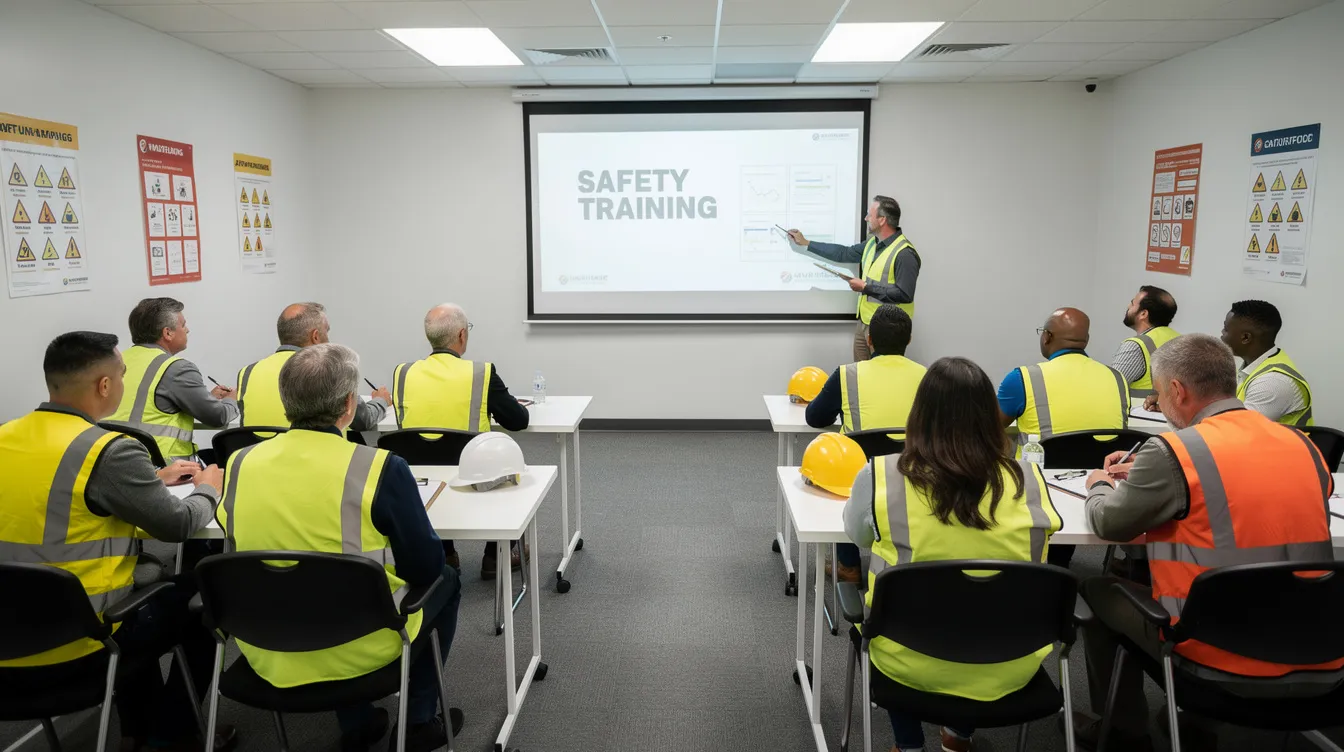
Training is one of the most visible ways a third-party safety partner can support internal teams. When fleets need consistent content across multiple terminals or locations, an outside trainer brings structured curriculum and regulatory depth that complements the company-specific context internal leaders provide.
Third-party safety companies provide training on OSHA regulations and safety protocols, and the same firms often deliver DOT-specific training as well. Practical training topics a transportation safety consultant can help deliver include DOT compliance basics, hours-of-service rules, defensive driving, reasonable-suspicion identification for supervisors, post-accident procedures, and updates on recent FMCSA regulatory changes. External trainers can enhance employee engagement during safety training sessions by bringing fresh perspectives and structured exercises that internal staff may not have time to develop.
Training delivery can take a variety of forms: live workshops at a terminal, virtual webinars for dispersed drivers, or self-paced online modules. Online driving safety courses can be completed at your own pace, which is useful for drivers who work irregular schedules and want to learn to drive safely and confidently. As a point of reference, Texas online driving safety courses have been available since 1998, approved by the Texas Department of Licensing and Regulation. Online courses can help dismiss traffic tickets or reduce insurance premiums for individual drivers; a certified driving record costs $24.95 in addition to course fees for those who need documentation of completion. Some courts or programs may require drivers to submit that record or certificate after course completion.
The strongest programs connect regulations to real fleet operations. Showing how hours-of-service rules affect actual routes, or how post-accident steps affect both drivers and claims handling, produces better retention than presenting abstract legal language in a conference room.
Supporting Safety Leadership Without Undermining It
Larger fleets and established organizations sometimes worry that bringing in a third-party consultant will confuse reporting lines or weaken the authority of the safety director. That concern is valid, and a professional third-party safety and compliance consulting relationship should address it directly.
Roles should be defined before work begins. The consultant, safety manager, operations leadership, HR, and executive leadership should all understand who owns decisions and who provides support or information. The consultant should never bypass the safety department to give instructions directly to drivers or dispatch unless that action has been explicitly coordinated with management.
The consultant’s role is to help the safety director be more effective: providing data, tools, and additional hands so that leadership can focus on strategy, coaching, and high-level risk management. When the relationship works well, the safety director’s authority increases because they have better information and more capacity to act on it.
Creating Accountability for Long-Term Compliance Projects
Projects like policy revisions, full file audits, training updates, and recurring compliance reviews often get pushed aside by daily emergencies. A company that intends to review all driver qualification files accumulated between 2020 and 2025 keeps postponing. Plans to update the driver handbook after FMCSA changes never get past the draft stage. The mission is clear, but the time is not there.
Third-party safety compliance services can introduce structure: agreed timelines, regular check-ins, written progress reports, and clear next steps for each project phase. Compliance auditing helps organizations maintain safety and adhere to regulatory standards over time, not just during a single push. Consultant services guidance is provided in a dedicated manual at many firms, giving both parties a shared reference for scope, deliverables, and responsibilities.
The outside partner can handle detailed work like sampling files, drafting updated policies for review, or preparing training materials. Internal leaders make final decisions and handle communication. This partner-style accountability helps ensure that important but non-urgent compliance tasks actually get completed, submitted for approval, and maintained over time.
Third-Party Compliance Support Can Scale With the Company
Third-party fleet safety consulting and outsourced compliance services do not have to be all or nothing. Support can scale to match company size, risk profile, and internal staffing.
Small fleets (under 20 trucks): A carrier at this size may rely on a consultant to help build the initial compliance program, set up driver qualification files, and train an office manager who has safety added to their responsibilities. Hiring third-party safety consultants can be cost-effective compared to maintaining full-time internal staff, especially when a fleet does not yet generate the workload to justify a dedicated safety position.
Growing fleets (40 to 60 new drivers over two years): A regional carrier adding trucks between 2024 and 2026 might use a consultant to standardize onboarding, implement a compliance calendar, and prepare for increased FMCSA attention that comes with higher power-unit counts. Third-party consultants can develop tailored safety programs for specific industries, whether that is construction hauling, waste collection, or regional freight.
Established fleets with dedicated safety departments: A company with internal safety staff may hire a DOT compliance consultant for periodic mock audits, specialized training, or projects tied to acquisitions and new terminals.
The same outside partner can adjust involvement over time: more hands-on during rapid growth or high-risk events, more advisory when systems are stable and internal staff numbers meet the workload.

What a Good Third-Party Safety Partnership Should Look Like
A strong partner takes time to learn your operations, routes, equipment, and customer expectations before recommending changes. If a firm sends you a generic template on day one without asking questions about your fleet, that is a red flag.
They should respect the existing safety leadership structure, clearly communicate regulatory requirements, and translate regulations into realistic, field-tested procedures your drivers and managers can actually follow. Consultants are selected through an equitable selection process, and the best relationships start with a clear understanding of scope, qualifications, and fit. Consultant services must meet the provisions of 23 U.S.C. 112(a) for federally funded work, and even outside that context, the same principle applies: the firm should meet defined standards of competence and accountability.
A good partner documents findings in a way your team can use: written summaries, prioritized risk lists, and specific recommendations rather than vague criticism. They adapt their services to your actual needs, offering targeted work like mock DOT audits, driver qualification file reviews, training, or ongoing advisory calls instead of a one-size-fits-all package. When you have questions, they provide answers grounded in the relevant section of 49 CFR, not generic advice that could apply to any industry.
How Focused Compliance Group Works With Internal Safety Teams
Focused Compliance Group works alongside internal safety directors, compliance teams, HR departments, fleet managers, and operations leadership to strengthen existing safety programs. We do not come in to take over your safety department.
The types of organizations we typically support include motor carriers, construction fleets, waste haulers, and contractor fleets subject to DOT and FMCSA regulations, ranging from small regional carriers to multi-state operations. Our services include DOT compliance consulting, FMCSA-focused mock DOT audits, driver qualification file reviews, policy and handbook development, safety and compliance training, corrective action support, fleet compliance management, and ongoing advisory services.
We provide qualified consultants and structured processes that give internal teams more insight, bandwidth, and practical tools. Our goal is to help clients build sustainable systems so that their safety department is stronger, more confident, and better equipped to manage compliance long after specific projects are complete. If your department needs additional resources for a defined project or ongoing support, contact our office to discuss how we can work with your team.
A Stronger Safety Program Is a Team Effort
The most resilient safety and compliance programs combine internal knowledge of drivers and operations with the outside perspective and specialized expertise of a third-party safety and compliance consulting partner. Neither side operates as well alone as they do together.
Third-party support does not replace your safety manager or compliance team. It gives them additional resources to manage DOT compliance, driver safety, and fleet operations more effectively. View outside partners as part of a long-term safety management strategy that evolves with regulatory changes, fleet growth, and shifting risk profiles.
If your safety department could use additional bandwidth, specialized expertise, or an independent review, a conversation with Focused Compliance Group is a practical next step. Whether you need consulting, training, mock audits, or ongoing advisory services, the opportunities to strengthen your program start with understanding what your team needs most and building from there.
Frequently Asked Questions
The following questions address common concerns that the main article may not have fully covered. Answers are concise and practical, written for safety managers and fleet owners who want specific information they can act on.
How long does a typical third-party safety and compliance engagement last?
Engagements vary. Some are short-term projects; a 30-to-90-day mock DOT audit and corrective-action project, for example. Others are ongoing relationships with monthly or quarterly support. Many companies start with a defined project, such as a driver qualification file review or audit preparation, and then decide whether ongoing advisory services or periodic reviews make sense. Duration should be based on the company’s goals, internal staffing, and the complexity of its operations rather than a fixed template. Send a request to the consulting firm outlining your needs, and a scoping conversation will typically clarify the right engagement length.
Will a third-party consultant need direct access to our safety systems and data?
Effective consulting usually requires access to relevant information: driver qualification files, hours-of-service data, drug and alcohol testing records, and safety policies. Access can be provided in different ways depending on your IT and security policies: read-only access to your existing systems, secure file transfers via mail or cloud platforms, or structured document requests. Reputable consultants follow confidentiality agreements and data-protection practices. Discuss data handling expectations before work begins, and obtain a written confidentiality agreement as part of the engagement terms.
How should we introduce a third-party safety partner to our drivers and frontline staff?
Company leadership and the safety manager should communicate clearly that the consultant is there to support the existing safety team and help everyone succeed, not to look for reasons to terminate drivers. A brief driver meeting or internal memo that explains what the consultant will work on, how it may involve drivers (for example, updated forms or training sessions), and who still makes final decisions will reduce anxiety. Transparent communication helps drivers view the partnership as part of the company’s commitment to safety and professionalism.
Can a third-party consultant help us prepare for customer or insurance safety reviews, not just DOT audits?
Yes. Many fleet safety consulting firms routinely help carriers prepare for customer audits, shipper qualification reviews, and insurance risk assessments in addition to formal DOT or FMCSA interventions. The same core documents and systems, including driver files, hours-of-service oversight, accident procedures, and safety training records, form the basis of both regulatory and customer reviews. Discuss upcoming customer or insurer requirements with the consultant early so preparation can be built into the project plan.
What internal roles usually work most closely with a third-party safety and compliance partner?
The primary contact is often the safety director, safety manager, or compliance manager. HR, operations, and fleet maintenance leaders are typically involved as well, depending on the scope of the engagement. In smaller fleets, an owner, general manager, or HR manager may fill the safety role and work directly with the consultant. Designate a clear internal point of contact to coordinate schedules, share documents, and ensure that recommendations are reviewed and implemented consistently across the organization.