
Before You Hand Over the Keys
You found a CDL driver you want to hire. The application looks good, the interview went well, and you need them on the road. But what exactly has to happen, under DOT rules, before they can legally and safely drive your trucks?
The answer involves more steps than most carriers expect. FMCSA regulations-primarily 49 CFR Parts 382, 383, and 391, plus the Drug & Alcohol Clearinghouse rules-control how CDL drivers are qualified and when they can start performing safety-sensitive functions. Skip a step or get the timing wrong, and you are exposed during audits, roadside inspections, insurance reviews, and crash litigation.
This article focuses on CDL drivers operating commercial motor vehicles in interstate commerce, but many of the same concepts apply to non CDL drivers operating CMVs over 10,001 lbs. We will walk through every compliance step in order: what must happen before the driver operates a CMV, what needs to be completed within the first 30 days, and what responsibilities continue for as long as that driver works for you.
This is not legal advice, and it reflects current federal regulations as of 2026. State intrastate rules may impose additional requirements. Many growing fleets partner with compliance specialists like Focused Compliance Group to coordinate this process, but this guide walks through every step regardless of whether you handle it in-house or outsource.
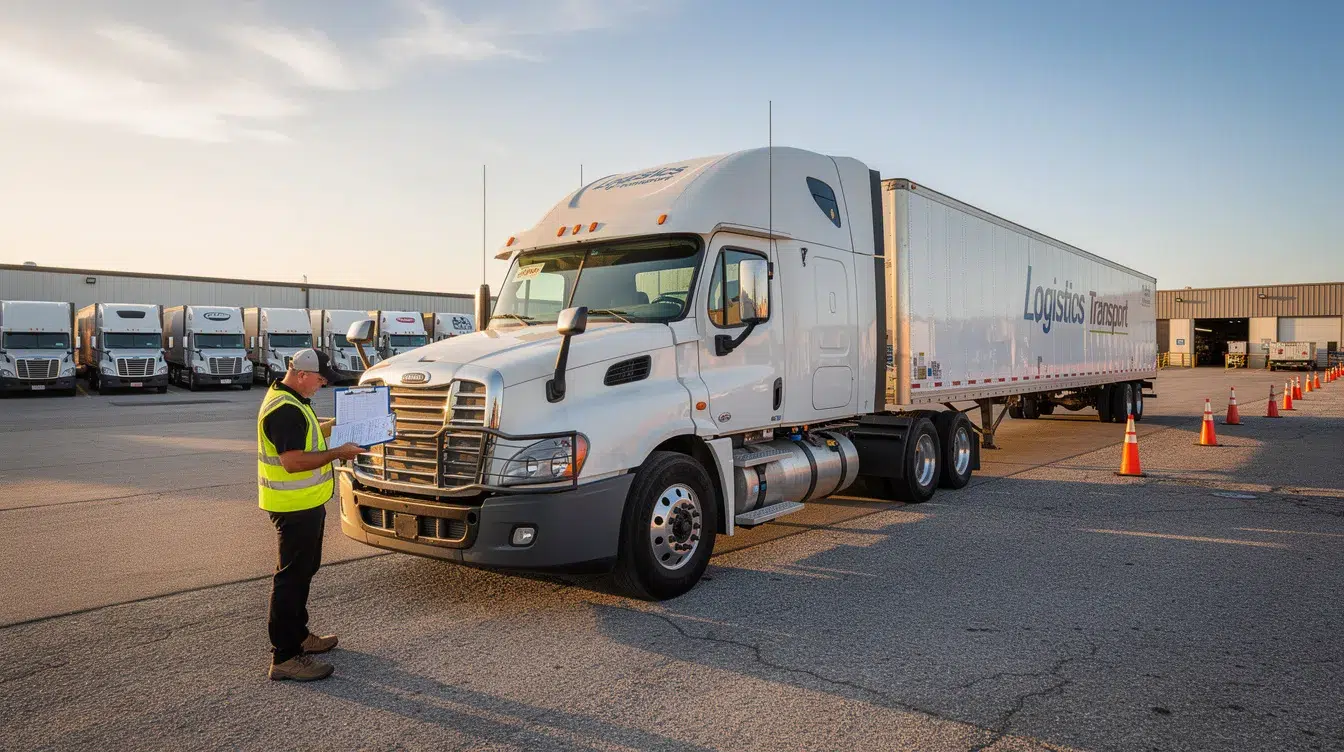
Step 1: Confirm the Driver Is Licensed for the Job (CDL & Endorsements)
Before anything else, confirm that the driver holds a valid commercial driver’s license of the correct class for the vehicle they will operate, with every endorsement the job requires.
Under 49 CFR Part 383, CDLs have been required for commercial motor vehicle operators since April 1, 1992. Drivers must pass both a knowledge test and a skills test to obtain a CDL, and CDLs are classified into three classes: A, B, and C. A Class A CDL is required when the gross combination weight of the vehicle configuration is 26,001 pounds or more, with the towed unit exceeding 10,000 pounds. Class B covers single vehicles with a gross vehicle weight rating above 26,001 pounds, and Class C applies to vehicles designed to transport 16 or more passengers or carrying hazardous materials.
Here is what to verify and document:
- A current, non-expired CDL of the correct class for the vehicle configuration and gross combination weight rating.
- Required endorsements based on operations: N for tanker, H for hazardous materials, X for tank/hazmat combination, P for passengers, and S for school bus.
- Restrictions such as automatic transmission only, no air brakes, or intrastate-only designations-and whether the job fits within those limits.
- Name, date of birth, CDL number, issuing state, and expiration date matching the employment application and I-9 documentation.
Drivers must have appropriate class and endorsements for their job. A photocopy of the CDL paired with the motor vehicle record check confirms the license is valid. Keep the copy, but understand that the official driving record comes from the MVR, not the plastic card.
Not every CMV driver needs a CDL. Some non CDL drivers operating vehicles over 10,001 lbs in interstate commerce are still subject to Parts 382 and 391, even without CDL requirements. Make sure you understand which category your drivers fall into.
For any driver who obtained a CDL, upgraded their class, or added certain endorsements (P, S, or H) on or after February 7, 2022, entry level driver training must have been completed through a provider in the FMCSA Training Provider Registry. We cover ELDT verification in more detail in Step 9.
FCG can help carriers build a standard CDL and endorsement verification checklist and maintain documentation in each driver’s qualification file.
Step 2: Collect a DOT-Compliant Driver Application
A DOT driver application is not the same as a standard HR application. Under 49 CFR §391.21, every driver subject to Part 391 must complete and sign an employment application with specific required data elements before operating a CMV. Using your company’s generic application without these elements is a compliance gap that auditors catch regularly.
Key application elements required by federal regulations:
- Full legal name, address history for the previous 3 years, date of birth, Social Security number (or equivalent), and phone number.
- Ten years of employment history for DOT-regulated driving jobs, and three years for non-driving positions, including reasons for leaving.
- Three years of driving experience details covering types of vehicles operated, approximate miles, and dates.
- Accident history for the past three years with dates, locations, nature of accidents, and fatalities or injuries.
- Traffic convictions and forfeitures for the past three years, excluding parking violations.
- A certification of the accuracy of information, along with signed authorization for background checks and prior employer contacts.
Electronic applications are acceptable as long as they capture all required information and electronic signatures comply with the definitions in §390.5T. Drivers can apply on a phone or tablet if your system meets these standards. Use structured screening processes focusing on safety and reliability to get the most out of this step.
The distinction between what is required and what is smart practice matters here. Federal rules mandate the specific data elements and a signed certification. As a best practice, also collect consent for ongoing MVR checks, Clearinghouse annual queries, and non-DOT background checks at the same time-it saves you from chasing the driver down later.
FCG can review your existing driver applications for compliance and provide standardized forms that work across multi-terminal fleets.
Step 3: Obtain and Review Motor Vehicle Records (MVRs)
An MVR check is not optional. Under 49 CFR §391.23, carriers must obtain a motor vehicle record from each state in which the driver held a license during the previous three years. For CDL drivers, at least one MVR must be obtained at the time of hire, with annual reviews required under §391.25 thereafter.
Timing matters. For CDL drivers, the MVR used to show medical certification may be up to 15 days old, but hiring carriers should pull a current MVR prior to dispatch. For non CDL CMV drivers, an initial MVR must be obtained within 30 days of the driver’s start date.
Review a clean motor vehicle record covering 3 to 10 years, depending on what states provide and your company’s internal standards. Here is what to look for:
- License status: valid, suspended, revoked, or disqualified.
- Endorsements and restrictions that match job duties.
- Moving violations such as speeding, reckless driving, DUI, and out-of-service orders.
- Serious violations listed in §383.51 that may trigger CDL disqualification.
- Crash involvement where reported on the record.
MVRs (both initial and annual) must be retained in the driver qualification file under §391.51. Most records must be kept as long as the driver is employed and for three years after they leave. Older MVRs can be replaced by more recent annual records once the three-year retention period passes.
Federal rules require you to obtain and review MVRs and document each annual review with a written note. As a best practice, consider automated MVR monitoring services that flag mid-year suspensions or new violations instead of relying only on an annual check.
FCG’s MVR services handle multi-state checks and ongoing monitoring so you do not miss a mid-year suspension or a lapsed license.

Step 4: Verify Previous Employment and Safety Performance History
There is a difference between a standard employment verification call and the DOT-required safety performance history investigation. Under 49 CFR §391.23, carriers must investigate the driver’s safety performance history for the preceding three years with all previous DOT-regulated employers. This includes accident details, drug and alcohol violations, refusals, and whether the driver completed any return-to-duty program.
The timing and process:
- Written or electronic requests must be sent within 30 days of the driver’s hiring date.
- Carriers must document good-faith attempts to obtain responses, including fax or email logs and certified letters.
- If prior employers do not respond, document that fact in the driver investigation history file under §391.53.
What must be requested includes accident history and safety performance data as defined in §391.23(d), along with prior drug and alcohol violations, refusals, and successful completion of return-to-duty and follow-up programs under §40.25 for drivers subject to DOT testing.
The FMCSA Drug & Alcohol Clearinghouse now houses CDL drug and alcohol violation data, but §391.23 and §40.25 employment history requirements still apply. Both the Clearinghouse query and the previous employer investigation must be addressed-they are complementary, not interchangeable.
Drivers also have rights here. Under §391.23(i) and (j), a driver can review the safety performance information obtained, request corrections from the previous employer, or attach a rebuttal statement if they disagree.
Federal rules require you to obtain DOT safety performance history from regulated employers. As a best practice, also verify non-DOT employment to confirm gaps in work history or long breaks from driving.
FCG can handle standardized previous employer requests, track responses and good-faith attempts, and keep all documentation organized in each driver’s qualification file.
Step 5: Run the FMCSA Drug & Alcohol Clearinghouse Query
The FMCSA Drug & Alcohol Clearinghouse is an online database that tracks CDL holders’ drug and alcohol regulation violations. Under 49 CFR Part 382 Subpart G, motor carriers must conduct mandatory queries of the FMCSA Drug and Alcohol Clearinghouse for all drivers who will perform safety-sensitive functions and hold a CDL or CLP.
Here is the pre-employment query process:
- Register your carrier in the Clearinghouse and designate any C/TPA if you use one.
- Obtain specific electronic consent from the driver within the Clearinghouse for a full query. Paper or blanket consents are not sufficient for full queries.
- Run the full query before allowing the driver to perform any safety-sensitive functions, including driving a CMV.
If the query returns a prohibited status, the driver cannot perform safety-sensitive functions until the return-to-duty process is completed with a Substance Abuse Professional and a negative return-to-duty test per Part 40 and Part 382. The carrier must retain documentation of the query result and any subsequent actions.
The ongoing obligation is straightforward: each CDL driver must be subject to at least one limited Clearinghouse query every 12 months for as long as they are employed in a safety-sensitive role. Drivers must sign general consent for limited queries, which can be retained on file outside the Clearinghouse system. If a limited query returns records, you must follow up with a full query.
Federal rules require both pre-employment full queries and annual limited queries. As a best practice, build Clearinghouse queries into every hiring checklist and set calendar reminders for annual queries. Consider running them more frequently for higher-risk operations.
FCG can manage Clearinghouse registration, driver consent workflows, and query documentation as part of a managed onboarding service.
Step 6: Complete DOT Pre-Employment Drug Testing
DOT pre-employment drug testing is a separate federal requirement from any company-policy test you might run. Under 49 CFR §382.301, carriers must administer a negative drug test and receive a verified negative result before allowing drivers to operate a commercial vehicle or perform any other safety-sensitive function.
What counts as a DOT pre-employment drug test:
- The test must be performed by a DOT-certified collection site and laboratory following 49 CFR Part 40 procedures.
- The standard DOT drug panel currently covers marijuana, cocaine, amphetamines, opioids, and phencyclidine.
- Results must be reviewed and verified by a Medical Review Officer (MRO).
The driver cannot perform safety-sensitive work until the employer receives a verified negative result. There is a narrow exception under §382.301(b) for drivers who were already participating in a compliant testing program within the previous 30 days and meet specific criteria, but carriers should use this exception cautiously and document it thoroughly.
Keep the custody and control form (CCF) copy and MRO verification record per Part 382 and Part 40 recordkeeping requirements. DOT drug and alcohol testing records are generally not stored inside the DQ file-they must be maintained in secure, separate files and produced on demand.
Your company may add non-DOT panels such as hair tests, but those cannot substitute for the DOT pre-employment test. Non-DOT testing should be clearly labeled and kept separate from DOT records.
FCG can provide or coordinate DOT drug testing and consortium (C/TPA) services, ensure proper recordkeeping, and integrate test results into your onboarding workflow.
Step 7: Verify DOT Medical Qualification and Medical Examiner’s Certificate
A DOT physical is required for commercial drivers operating CMVs subject to Part 391. Under 49 CFR §391.41 through §391.45, every such driver must be medically qualified and hold a valid medical examiner’s certificate (MEC), commonly called a DOT medical card. Certified medical examiners listed on the National Registry of Certified Medical Examiners perform DOT physicals.
The DOT physical includes a health history review and physical exam covering vision, hearing, blood pressure, cardiovascular health, and other conditions that could affect safe driving. Medical exam results are reported to the National Registry of Certified Medical Examiners by the examiner. Drivers must pass a DOT physical to maintain their CDL, and the certificate is typically valid for up to 24 months, though certain conditions may require shorter intervals. Drivers with insulin-treated diabetes must meet updated standards for certification.

Verification steps for the hiring carrier:
- Obtain a copy of the current MEC or, for CDL drivers, an MVR that reflects the medical certification if the exam was more than 15 days prior.
- Confirm the certification length: two-year card, one-year card, or shorter for certain conditions.
- Verify the examiner’s status on the National Registry as of the exam date and document this verification, which is a federal requirement per 49 CFR §391.51(b)(7)(ii).
For CDL drivers, the state licensing agency typically records the MEC, and carriers may rely on an updated MVR to show medical status. For non CDL CMV drivers, the carrier must retain a copy of the MEC in the DQ file along with any applicable exemption documentation.
Federal rules require the driver to be medically qualified and the documentation to be retained. As a best practice, carriers should maintain an expiration tracking system-spreadsheet or software-to notify drivers 60 to 90 days before MEC expiration and prevent lapses.
A medical examiner’s certificate is required for CDL drivers, and letting it lapse is one of the most common violations found during audits and roadside inspections. FCG can help track medical card expirations, coordinate DOT physical appointments, and document National Registry verification for each driver.
Step 8: Conduct and Document the Road Test (or Accept CDL Equivalent)
Most new drivers must complete a road test or provide acceptable equivalent documentation before operating your equipment in regular service. Under 49 CFR §391.31, carriers must conduct a road test for drivers operating CMVs unless the driver presents an acceptable CDL equivalent under §391.33. The road test must be performed by a qualified person and conducted in the type of vehicle the driver will operate.
Road test content covers pre-trip inspection, coupling and uncoupling if applicable, urban and highway driving, backing, turning, and safe operating practices. The evaluator should assess shifting (if manual), use of brakes, mirrors, and defensive driving behavior.
The road test examiner completes and signs a road test certificate, which goes in the DQ file. If relying on a CDL as the equivalent, retain a copy of the CDL and a statement or notation per §391.33 documenting the use of the CDL in lieu of a road test.
Timing: the road test and documentation must be complete before the driver is assigned to operate a CMV in regular service. Federal rules require a road test or documented CDL equivalent. As a best practice, always road-test new-to-company drivers-even experienced CDL holders-especially for specialized equipment like tankers, flatbeds, or doubles.
FCG can provide standard road test forms and help carriers build consistent road test procedures across multiple locations.
Step 9: Confirm Entry Level Driver Training (ELDT) Where Required
Entry level driver training is mandatory for new CDL applicants, drivers upgrading their CDL class, and those obtaining P (passenger), S (school bus), or H (hazardous materials) endorsements for the first time on or after February 7, 2022. Under 49 CFR Part 380 Subparts F and G, training must be completed through a provider registered in the FMCSA Training Provider Registry.
As a hiring carrier, your verification role is limited but important. Confirm through the driver’s CDL issue date and endorsements whether ELDT applied to them. Where applicable, verify that the driver’s training program provider submitted ELDT completion to the TPR. The state DMV relies on this submission before issuing the CDL or endorsement, so if the driver holds the CDL, ELDT was likely completed-but retaining a copy of completion certificates is a smart practice.
Federal rules mean the state will not issue the CDL or endorsement without ELDT completion when required; the carrier does not “approve” ELDT. As a best practice, retain any training certificates or diplomas in the driver’s file and ensure orientation includes company-specific training on your equipment and policies. ELDT does not replace your company road test or orientation.
Many carriers also partner with local CDL schools to connect with new drivers early, creating a pipeline of ELDT-compliant candidates before they even apply.
Step 10: Build and Organize the Driver Qualification File (DQ File)
A driver qualification file is the carrier’s organized record proving each driver is federally qualified. Under 49 CFR §391.51, a DQ file is mandatory for CDL drivers operating CMVs in interstate commerce. A DQF is also required for non-CDL drivers with specific vehicle weights-those operating vehicles with a gross vehicle weight, gross vehicle weight rating, gross combination weight, or gross combination weight rating of 10,001 pounds or more in interstate commerce, as specified by §390.5T definitions.
Key documents that must be in the DQF at or shortly after hire include the DOT-compliant driver application, initial MVR(s) from each state the driver was licensed in, safety performance history and previous employer investigation documentation, road test certificate or documentation of CDL equivalent, medical examiner’s certificate (for non-CDL CMV drivers) or proof of medical certification via MVR (for CDL drivers) plus National Registry verification note, and any required waivers or exemptions. Annual MVR reviews and list-of-violations forms are added once completed.
The DQF must include the employment application and prior employment verification. Certain related items must be kept but in separate files: DOT drug and alcohol testing records (Part 40 and Part 382), Clearinghouse query documentation, and random testing pool records belong in secure testing files, not inside the DQF itself.
Retention periods under §391.51 require that most DQF items be kept as long as the driver is employed and for at least three years after they leave. Some records, such as older MVRs, may be replaced by more recent annual reviews once the three-year cycle passes.
Federal rules require a compliant DQF that can be produced on request during audits-typically within two business days. As a best practice, use a standardized DQF checklist and consistent digital folder structure across all terminals. Electronic storage is permitted as long as records are accurate, secure, and readily available.
FCG offers DQ file setup and ongoing maintenance services, including electronic DQ files, expiration tracking, and mock-audit reviews to verify everything is properly documented.
Step 11: Provide Required Company Policies, Notices, and Training
Some onboarding materials are federally required; others are recommended. The distinction matters.
Federal requirements include a DOT drug and alcohol policy: Part 382 requires carriers to provide drivers with materials explaining their drug and alcohol testing program and consequences of violations before the driver performs safety-sensitive functions. Carriers must obtain a signed acknowledgment or receipt. Additionally, while there is no specific “HOS handout” mandate, carriers must ensure drivers are trained to use ELDs properly and comply with hours-of-service rules under Parts 395 and 395.22. Framing this as a compliance obligation is appropriate.
Recommended best practices include a company safety manual covering speed policies, accident reporting, load securement expectations, cell phone use, and disciplinary procedures. Reasonable suspicion training for supervisors is a federal requirement under §382.603 for those who make testing determinations, though it is typically provided during company rollout rather than per-driver onboarding.
What to retain: a signed drug and alcohol policy receipt, acknowledgments of receipt of key safety policies and orientation materials, and records of any safety or compliance training completed during onboarding with dates, topics, trainer name, and attendee list.
FCG can provide template DOT drug and alcohol policies, reasonable suspicion training, and help structure a consistent compliance-focused orientation for every new driver.
Step 12: Decide When the Driver Can Legally Start Driving
This is the go or no-go decision. Before a new hire can be dispatched in a CMV, every one of the following must be complete:
- Valid CDL of proper class and endorsements confirmed, or qualifying non-CDL CMV status verified.
- Driver application completed and signed.
- Initial MVR(s) obtained and reviewed with no disqualifying history.
- Pre-employment full Clearinghouse query completed with no prohibited status.
- Verified negative DOT pre-employment drug test result received (unless qualifying for the narrow exception under §382.301(b)).
- Medical qualification verified and MEC documentation in place.
- Road test completed and road test certificate issued, or CDL equivalent documented.
- Required policies delivered and driver signed acknowledgment of drug and alcohol policy.
Items that can be finalized shortly after hire but should be started immediately: safety performance history requests and documentation of good-faith attempts (within 30 days), and additional MVRs for all states licensed in the previous three years if not already obtained.
A new CDL driver can begin driving once every “before driving” item on this list is verified and documented. The items with a 30-day window-primarily previous employer investigations-may still be in progress, but all pre-dispatch requirements must be complete. Document the date and the person who confirmed readiness.
Passing DOT checks does not automatically make someone a good hire. Apply your own safety standards-such as no DUI within a specified number of years, a limit on serious violations, or minimum experience requirements-on top of federal minimums. Transparency in pay and job expectations can also reduce turnover rates down the line.

Step 13: Document the Hiring and Qualification Process
Documentation is what separates a good hiring process from a defensible one.
FMCSA new-entrant audits and compliance reviews routinely request DQ files, drug and alcohol program records, Clearinghouse queries, and proof of policies. New motor carriers must pass a safety audit within 12 months of receiving operating authority, and DQ files are among the first things reviewed. In the event of a crash or claim, clear records of qualification steps can be critical to defending the carrier’s safety practices.
Create a standard CDL driver hiring checklist form that lists each compliance step with a completion date and initials, lives in or alongside the DQ file to prove the sequence of events, and is used consistently across all locations and hiring managers.
Federal rules allow electronic storage of DQFs and related records as long as they are accurate, secure, and readily available. Common approaches include scanning documents to PDF, using cloud-based DQ systems, or working with a compliance provider who maintains the files on your behalf.
FCG can implement standardized onboarding checklists and electronic DQ systems, and perform mock audits to verify everything is properly documented before an actual FMCSA review.
Step 14: Understand What Continues After the Driver Is Hired
Hiring is only the beginning. Once a driver is qualified and behind the wheel, the carrier’s compliance obligations continue indefinitely.
The main ongoing responsibilities include annual MVR reviews and violation lists, medical card renewals and CDL expiration tracking, random drug and alcohol testing and annual Clearinghouse queries, DQ file updates and record retention, and ongoing safety and compliance training.
For growing fleets, the real risk is often not the initial hire but missing deadlines later-because driver records and expirations are not tracked centrally. One lapsed medical card or one missed annual MVR can trigger violations during a roadside inspection or audit.
FCG specializes in helping fleets manage these ongoing responsibilities. The following sections lay out what carriers must do even if they handle everything in-house.
Step 15: Ongoing MVR Reviews and Driver Monitoring
Under 49 CFR §391.25, the carrier must obtain an updated MVR at least once every 12 months for each driver. The carrier must review the record and document conclusions about the driver’s continued qualification-typically via an annual review form that is signed and dated by the person responsible.
Best practices go further: implement quarterly or continuous MVR monitoring instead of relying only on annual checks, especially for higher-risk fleets. Establish written internal criteria, such as a maximum number of moving violations allowed, to guide decisions and avoid inconsistent treatment across drivers or locations.
The most recent annual MVR and written review note should go into the DQ file. Where used, a driver’s annual list of violations-acknowledging or confirming no additional convictions beyond the MVR-should also be included.
FCG’s MVR monitoring and DQ maintenance services automate annual reviews and help interpret MVR findings so carriers can make informed decisions quickly.
Step 16: Tracking Medical Card and CDL Expirations
While the driver is responsible for renewing their CDL and MEC, the carrier is responsible for not allowing disqualified drivers to operate. Failing to track expirations can lead to violations, out-of-service orders at roadside, and serious insurance exposure.
A simple tracking approach works: maintain a centralized list or software system with each driver’s CDL expiration date, MEC expiration date, and any waivers or exemptions. Set reminders at 90, 60, and 30 days before expiration. Require proof of a new MEC and updated CDL before the old ones expire, and update DQ files and MVRs accordingly.
Federal rules require the driver to always be qualified and properly licensed, but there is no explicit regulation dictating how the carrier tracks it. The best practice is a proactive tracking system and a written policy that drivers cannot be dispatched within a set number of days of expiration without proof of renewal. The schedule for DOT physicals and medical exam renewals should be treated as a non-negotiable operational process, not an afterthought.
FCG’s compliance tracking services monitor these dates and notify carriers before expirations, helping avoid roadside and audit issues as fleets grow.
Step 17: Random Drug & Alcohol Testing and Clearinghouse Annual Queries
Two continuing obligations run in parallel for every CDL holder performing safety-sensitive functions: random testing and annual Clearinghouse queries.
Under 49 CFR Part 382 Subpart C, carriers must enroll CDL drivers in a random testing pool and meet FMCSA’s minimum annual testing rates for both drugs and alcohol. Drivers must remain in the pool as long as they perform safety-sensitive functions, and any additions or removals must be documented.
For the Clearinghouse, each CDL driver must be subject to at least one limited query every 12 months. The carrier must maintain driver consent for limited queries-paper or electronic-and keep records of completed queries. If a limited query returns records, a full query with electronic consent in the Clearinghouse must follow.
Federal rules require a compliant random program and annual Clearinghouse queries. As a best practice, run monthly random selections, follow up promptly on any non-compliance, and track internal metrics to confirm testing rates are on pace throughout the year rather than scrambling in December.
FCG serves as a C/TPA for drug and alcohol testing, managing random pool administration, Clearinghouse queries, and testing logistics so carriers can focus on operations.
Step 18: Updating and Retaining the Driver Qualification File
The DQF must be maintained throughout the driver’s employment. It is a living record, not a one-time hiring folder.
Common updates include annual MVRs and review forms, new medical certifications or changes in waiver or exemption status, road test certificates for changes in vehicle type where road tests are repeated, and notations of status changes such as transfer to a non-driving position or leave of absence affecting qualification.
Retention periods under 49 CFR §391.51 require that many items be kept as long as the driver is employed and for at least three years after they leave. Some records, such as older MVRs, may be replaced by more recent years following regulation allowances-you do not need to keep every MVR from the driver’s entire career, but you do need the most recent three years’ worth plus the initial MVR.
Federal rules set minimum retention and availability standards. As a best practice, maintain comprehensive electronic DQ files that are backed up and easily retrievable for audits and claims. Purging files too quickly after a driver leaves is a common mistake carriers make, especially if that driver was involved in an incident during the retention period.
FCG can maintain DQ files, handle retention rules, and prepare files to be audit-ready at all times.
Step 19: Company Safety, HOS, and ELD Onboarding (Best Practice)
This section is primarily recommended best practice, though federal rules indirectly require the outcomes-drivers must know and follow HOS rules, and they must be able to operate ELDs properly.
Key topics to cover in the first days include hours-of-service rules applicable to the operation (property-carrying 11/14-hour rules, 60/70-hour limits, sleeper berth provisions, short-haul exceptions), ELD or logging device operation (logging in, status changes, edits, roadside inspection mode, malfunction procedures), and safety procedures specific to the carrier such as load securement, backing policies, speed management, accident reporting, and post-crash testing procedures.
FMCSA does not mandate a specific “new-driver training course” for all carriers beyond ELDT requirements. But carriers are responsible for ensuring CMV drivers know and follow HOS and safety rules. Training and documented onboarding support this responsibility and give you something to point to if questions arise later.
FCG provides safety and compliance training modules, including HOS and ELD onboarding content and reasonable suspicion training for supervisors.
Step 20: Scaling Your CDL Driver Onboarding for Multiple Drivers and Locations
For fleets with 5 to 100 trucks hiring multiple drivers at once-sometimes across more than one terminal-keeping the process consistent is the real challenge.
Common pain points include different managers following different hiring steps or cutting corners under time pressure, losing track of which documents are still pending for which drivers, and inconsistent DQ files that raise flags during audits or insurance reviews.
A scalable approach starts with a standardized CDL driver hiring checklist used for every new driver, centralized digital storage accessible to management and safety staff, and clear role assignments for who orders MVRs, who runs Clearinghouse queries, who manages drug tests, and who signs road test certificates.
Beyond compliance, operational recruiting practices matter too. Fast response times in recruiting can significantly improve hiring success, and optimizing mobile-friendly job postings can increase applicant interest-especially with the current driver shortage. Implement an employee referral program to attract qualified candidates, and consider partnering with local CDL schools to build a pipeline of new CDL holders. Focus on retention by analyzing driver turnover reasons regularly. Home time, competitive pay, and transparency about job expectations go a long way toward keeping the drivers you worked so hard to qualify.

FCG partners with fleets to design and implement scalable onboarding workflows, whether the carrier is adding two drivers or twenty.
Where Focused Compliance Group (FCG) Can Help
By this point, you have seen how many moving parts are involved in hiring a single CDL driver compliantly: CDL licensing checks, MVRs, previous employer investigations, Clearinghouse queries, DOT drug testing, medical cards, road tests, DQ file assembly, random testing programs, and ongoing tracking of dates, documents, and renewals.
FCG is a DOT compliance and safety partner that can build, document, and manage this entire process. Services include DQ file setup and maintenance, MVR and background checks, drug and alcohol testing and consortium services, Clearinghouse support, compliance tracking tools, and safety training.
If you are hiring drivers and want to review whether your current onboarding process covers every DOT requirement, schedule a short conversation with FCG. You can also request a sample onboarding workflow or an audit of your existing driver files. No pressure, no pitch-just a practical look at where you stand.
Quick-Reference: CDL Driver Hiring Checklist
What do you need to hire a CDL driver? To hire a CDL driver compliantly, a motor carrier must verify the driver holds a valid CDL with the correct class and endorsements, collect a DOT-compliant driver application, obtain and review MVRs from all states where the driver was licensed in the past three years, run a pre-employment full query of the FMCSA Drug & Alcohol Clearinghouse, receive a verified negative DOT pre-employment drug test, confirm DOT medical qualification with a current medical examiner’s certificate, complete a road test or document the CDL equivalent, and assemble all required documents into a driver qualification file.
What are DOT hiring requirements for CDL drivers? Federal standards under 49 CFR Parts 382, 383, and 391 require motor carriers to verify CDL validity, conduct background and safety performance history checks, query the Clearinghouse, complete DOT drug testing, confirm medical fitness, perform road tests, and build and maintain a DQ file for each driver.
|
Compliance Step |
Before Driving |
Within 30 Days |
Ongoing |
|---|---|---|---|
|
CDL & endorsement verification |
✓ |
|
Annual at renewal |
|
DOT driver application |
✓ |
|
|
|
Initial MVR(s) |
✓ |
|
Annual review |
|
Previous employer safety history |
Started |
✓ |
|
|
Clearinghouse full query |
✓ |
|
Annual limited query |
|
Pre-employment drug test (negative) |
✓ |
|
Random testing |
|
Medical examiner’s certificate |
✓ |
|
Track expiration |
|
Road test or CDL equivalent |
✓ |
|
New vehicle types |
|
Drug & alcohol policy acknowledgment |
✓ |
|
|
|
DQ file assembled |
✓ |
Complete |
Maintain and update |
Final Thoughts
Hiring a CDL driver is a structured federal compliance process, not just a recruiting decision. Every step-from verifying the license to building the DQ file-exists to protect the carrier, the driver, and the public. A well-documented onboarding process is your best defense during audits, inspections, and the moments that matter most.
Carriers remain legally responsible for driver qualification even when using outside services. No consultant or third-party administrator removes that accountability. But having a system in place-one that works the same way every time, for every driver, at every location-makes the difference between a carrier that passes audits confidently and one that scrambles to find paperwork.
If you are not sure whether your current process covers everything in this checklist, compare it step by step. And if you want help building or refining a CDL driver onboarding workflow that holds up under scrutiny, reach out to Focused Compliance Group. A short conversation can identify gaps before an auditor does.
FAQ: CDL Driver Hiring and DOT Compliance
These FAQs address common follow-up questions that carriers ask when working through the CDL driver hiring checklist above.
Do these DOT hiring requirements apply if I only run intrastate and not interstate?
FMCSA regulations primarily apply to interstate commerce, but many states adopt the same or similar rules for intrastate operations under their own motor carrier safety programs. CDL licensing, drug and alcohol testing for CDL holders, and many driver qualification rules often still apply even if the carrier stays within one state. Do not assume “intrastate only” means “exempt.” Check with your state motor carrier agency or a compliance specialist to confirm which federal standards your state has adopted for intrastate CMV operations.
How long should I keep driver qualification records after a driver leaves?
Under 49 CFR §391.51, many DQF elements must be retained for at least three years after a driver’s employment ends. Some records, such as older annual MVRs, follow a “most recent three years” rule during employment. Avoid purging DQF records too quickly after separation-prior driver files may be requested during audits or litigation involving past incidents, sometimes years after the driver left. When in doubt, consult current FMCSA guidance or a compliance provider for an up-to-date retention schedule.
Can I hire a CDL driver who had a positive drug test in the past?
A past positive test or refusal does not automatically disqualify a driver from employment. However, the driver must have completed the required return-to-duty process with a Substance Abuse Professional and received a negative return-to-duty test. This information will appear in the Clearinghouse. Carriers must not allow drivers with a current prohibited status in the Clearinghouse to perform safety-sensitive functions. Beyond federal minimums, carriers should apply their own safety standards regarding time since violation and overall risk tolerance.
Can I outsource DOT compliance and driver qualification to a third party and be legally covered?
Carriers can use consultants and third-party administrators like FCG to manage compliance processes and records, but the motor carrier is always ultimately responsible for compliance under FMCSA rules. Outsourcing helps ensure tasks are completed and documented correctly, but FMCSA will still hold the carrier accountable during audits or investigations. Maintain visibility into your compliance program even when partnering with a provider-review files periodically, ask questions, and understand what is being done on your behalf.
What happens if a required document like a medical card or CDL expires while the driver is employed?
If a driver’s medical examiner’s certificate or CDL expires, the driver is no longer qualified to operate a CMV. The carrier must remove the driver from safety-sensitive functions until the document is renewed and proof is provided. Roadside inspections that discover expired credentials result in out-of-service orders, and audit findings for expired documents can affect your carrier’s safety rating. Proactive expiration tracking-whether through a spreadsheet, software, or a managed compliance service-prevents these situations from arising.