
Most compliance problems do not begin as major failures. They begin as small things: a missing document in a driver file, an expired record that slipped through, an inconsistent process between two departments, a supervisor who misunderstood a requirement, a procedure everyone assumed someone else was handling. Individually, these issues seem minor. During an official FMCSA compliance audit, however, they add up quickly.
A mock DOT audit gives your company the opportunity to discover those weaknesses while you still control the timeline, the participants, and the corrective actions. The purpose of a mock DOT audit is proactive risk management. It is not about catching employees doing something wrong. It is about giving safety and operations leaders enough time to correct systems before those gaps show up on FMCSA’s radar and turn into violations, fines, or worse.

What Is a Mock DOT Audit?
A mock DOT audit is an internal or third-party transportation compliance review that simulates an official audit and is structured like an FMCSA compliance review, but conducted before an investigator arrives. It is not a government action. A mock DOT audit is not an official FMCSA audit and does not create a safety rating, impose fines, or trigger enforcement. Instead, it is modeled on the same areas a DOT compliance audit would examine and evaluates compliance with FMCSA and DOT regulations.
For fleet safety and operations leaders, compliance managers, and companies running DOT-regulated commercial motor vehicles—including trucking, construction, waste, recycling, and private fleets—the point is to find and fix compliance gaps before an official review exposes them. Core files include driver qualification, hours of service, vehicle maintenance, and drug and alcohol testing. A thorough mock DOT audit also reviews accident records, company policies, training documentation, corrective responsibilities, and the operational systems that produce and maintain all of this paperwork.
What separates a useful mock audit from a superficial one is depth. A strong review evaluates both what is on file and the process behind it: who is responsible for each task, when it gets done, and what happens when something falls through the cracks. A mock DOT audit reviews core operational areas like driver qualification and hours of service, but it also tests whether your people and systems can sustain compliance day after day, reducing the risk of violations, fines, safety rating downgrades, and operational disruption.
Companies use mock audits to prepare for a new entrant safety audit, a full compliance review, a major contract bid, or after rapid fleet growth. New entrants must complete a safety audit within 18 months of receiving operating authority, making early preparation essential.
Why Internal Reviews Sometimes Miss Problems
Most safety and compliance managers work hard. They are not careless. But they are immersed in daily operations, and that proximity to the work can create blind spots.
When you use the same processes every day, you start to assume they work. People assume a driver qualification file is complete because the hiring checklist was followed. They trust that the ELD system is capturing everything because it has not thrown any alerts. They believe annual MVR reviews are current because they remember doing them last year.
Here are a few examples of how these assumptions play out:
- Medical cards expire, but no one notices because the tracking spreadsheet was not updated after a system migration in 2024.
- Previous employer safety performance inquiries from 2022 or 2023 are missing because HR thought the Clearinghouse query covered that requirement.
- ELD records show unidentified driving events that were never reassigned to a driver.
- Post-accident documentation is incomplete because no one confirmed whether the crash met the threshold for drug and alcohol testing.
Internal file spot-checks are useful, but they are often limited in scope. They tend to focus on recent records and visible gaps rather than testing the underlying system. Regular internal assessments enhance compliance readiness throughout the year, but they work best when combined with an independent review that comes in with no assumptions, tests random samples across time periods, and asks why the same gaps keep showing up. Establishing a continuous readiness program for compliance is essential for fleet operation success.
What Areas Should a Mock DOT Audit Review?
A thorough fleet compliance audit should mirror the structure of an FMCSA compliance review. The sections below outline the major categories a mock audit should cover, regardless of whether your fleet runs over-the-road trucking, construction, waste and recycling, private carrier service, or hazardous materials operations.
The mock review should pull records from the last 12 to 24 months, not just the last few weeks. Patterns in compliance performance only become visible when you look across a meaningful timeframe. Every fleet is different in its vehicle type, routes, and daily workflows, but these areas apply to most DOT-regulated operations.
Driver Qualification Files
Driver qualification files are one of the first places FMCSA inspectors look, and missing DQ files are among the most common audit findings during compliance reviews. Every commercial driver must have a complete DQ file on record.
A mock audit should verify the following for each driver file:
- Completed driver application
- Prior employer inquiries covering the last 3 years
- Motor vehicle records (MVRs) from each state of licensure
- CDL and endorsement verification
- Medical examiner’s certificate (current and from a listed provider)
- Road test certificate or equivalent documentation
- Safety performance history from prior DOT-regulated employers
- Annual driving record reviews, signed and dated
Expired medical cards are frequent findings in audits. DQ files must include annual driving record reviews, and auditors require valid CDLs and driver qualification files for every active driver. Inaccurate DQ files can lead to operating authority revocation in serious cases.
Beyond checking documents, the reviewer should assess your onboarding process: who owns the checklist, what happens when recruiting hands off to safety, and whether any driver is dispatched before the file is complete. If the same document is missing from multiple driver files, it is not a series of individual mistakes. It is a systemic driver qualification process issue.
Hours of Service and ELD Compliance
Owning an ELD system does not automatically create hours-of-service compliance, and ELD use is mandatory for most covered carriers and drivers subject to the rule. FMCSA investigators routinely find form-and-manner issues, falsification, and misuse problems even with modern systems.
The mock DOT audit should pull a sample of HOS logs and supporting documents, including fuel receipts, toll records, and dispatch records, to check for consistency and recurring patterns. HOS logs must be pulled straight from your ELD, not from manually recreated summaries.
Key checks include:
- Unresolved ELD malfunctions or diagnostics
- Excessive personal conveyance use
- Unassigned or unidentified driving events
- Frequent edits without proper annotations
- Repeated 11-hour and 14-hour rule violations
- Whether supporting documents match the log data
The reviewer should also examine your company’s monitoring practices. Who reviews logs? How often? What exception reports are run? How are drivers coached when HOS violations are found? Are corrective actions documented?
For example, a mock audit might discover that weekend linehaul trips consistently show repeated HOS violations because no one reviews logs until Tuesday morning. That is not a driver problem. That is a supervision gap.
Drug and Alcohol Testing Compliance
Failures in the drug and alcohol program carry significant enforcement risk and are a major focus during both new entrant safety audits and full compliance reviews. Drug and alcohol testing records are essential for audits.
The mock audit should review:
- Pre-employment testing records
- Random testing selections and completion records
- Post-accident testing decisions and documentation
- Reasonable suspicion testing and supervisor documentation
- Return-to-duty and follow-up testing records
- Record retention and organization
Clearinghouse responsibilities deserve particular attention. The reviewer should verify query records on hire, annual queries for all CDL drivers, reporting of positive tests and refusals, and documentation of driver consent. Since January 2023, once the Clearinghouse accumulated three years of violation data, separate prior-employer inquiries under 49 CFR 391.23(e) are no longer required, but many carriers still have gaps from the transition period.
The audit should also verify your random testing rate, the selection method, and whether selected drivers were actually tested within the required timeframes. Missing annual Clearinghouse queries for 2023 or incomplete post-accident test documentation are common findings that carry real audit risk.
Vehicle and Maintenance Records
Vehicle condition directly affects roadside inspection results, CSA Vehicle Maintenance BASIC scores, and ultimately the risk of triggering a DOT audit. Fleet inspections impact safety, liability, uptime, and operating cost. A mock DOT audit should include vehicle and equipment inspections alongside the documentation review.
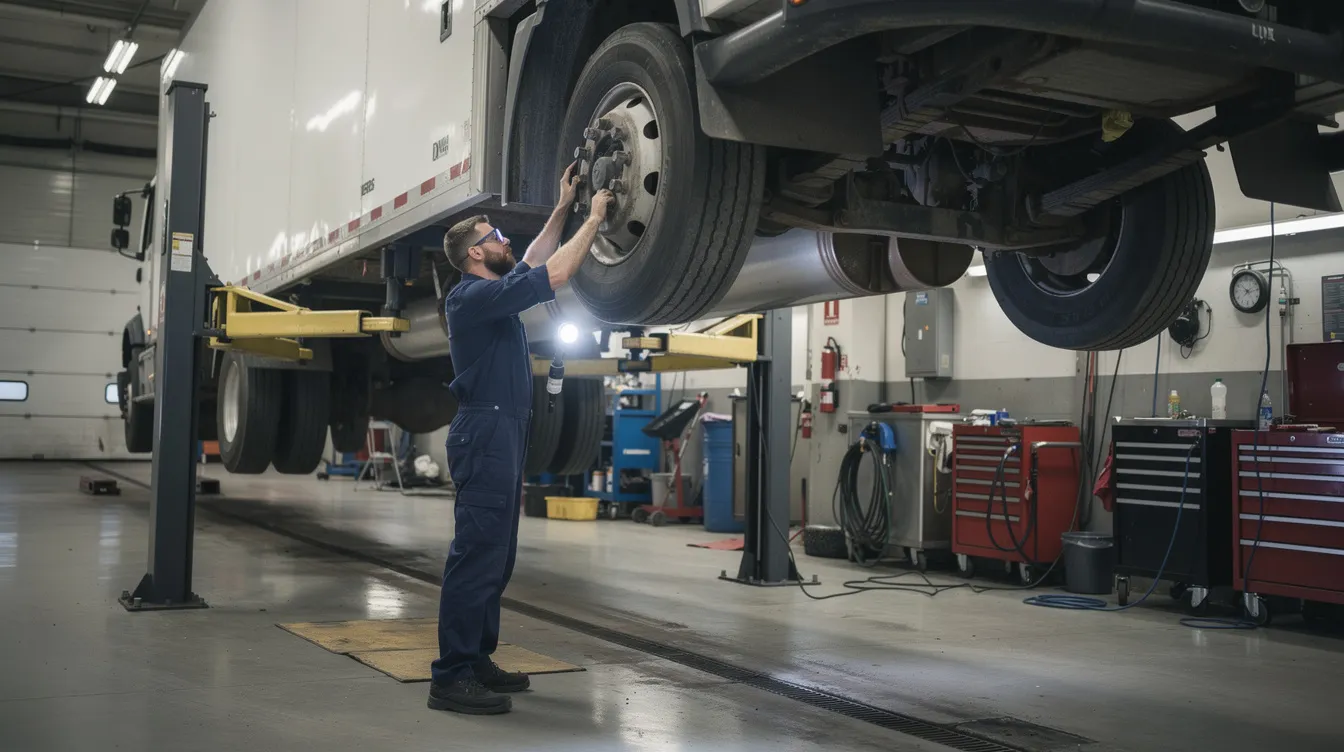
The maintenance documentation a mock audit should sample includes:
- Preventive maintenance schedules and completion records
- Repair orders and parts documentation
- Annual inspection certificates
- Driver vehicle inspection reports (DVIRs)
- Evidence of defect corrections linked to specific DVIRs
Daily inspections help catch immediate safety risks, while weekly inspections focus on preventive maintenance checks. Missing inspection paperwork is treated like missing inspections by regulators, even if the inspections actually occurred. In 2025, over 171,000 roadside citations were issued just for operating without documentation of a periodic inspection.
Digital DVIRs improve audit outcomes and reduce violations compared to paper-based systems. Auditors expect consistent inspection records across vehicles, so the reviewer should compare inspection and repair dates against mileage or engine-hour intervals to see whether PM schedules are realistic and actually followed. Maintenance and repair history should be documented for audits and retrievable quickly, whether your system is paper or digital.
Accident Records and Post-Accident Procedures
FMCSA requires an accident register and related documentation for crashes meeting specific reportable criteria, and investigators review these closely during a compliance review.
A mock DOT audit should check:
- A complete accident register for the past 3 years
- Police reports and internal investigation notes
- Photos and scene documentation where available
- Corrective actions taken after each incident
- Post-accident drug and alcohol testing decisions, including documentation of why testing was not conducted when a crash did not meet thresholds
The reviewer should look for patterns: recurring backing crashes in yards, frequent lane-change incidents, or similar weather-related events. More importantly, the audit should assess whether the company adjusted training, procedures, or equipment after identifying those patterns. Findings from this section should feed back into safety meetings, driver coaching, and broader safety management controls.
Company Policies and Procedures
Written policies alone do not create compliance. Investigators care whether those policies are implemented consistently in daily workflows. A mock DOT audit tests the functionality of safety-management processes, not just paperwork verification.
The main policies to compare against reality include:
- Hiring and driver qualification policy
- Hours-of-service and ELD policy
- Drug and alcohol policy
- Vehicle inspection and maintenance policy
- Accident response procedures
The mock audit should interview managers, dispatchers, and drivers to see if they understand and follow the written policies, or if “the way we really do it” differs from what is documented. Discrepancies between policy and practice can be riskier than having a simpler but accurate policy, because they undermine credibility during a DOT compliance review.
Where policies reference outdated regulations, such as pre-2018 ELD language that no longer matches current systems, the audit should recommend targeted updates.
Training and Supervisor Responsibilities
Most recurring violations point back to someone in the workflow who never fully understood their compliance role. The mock audit should focus on key roles: safety managers, dispatchers, driver supervisors, HR or recruiting staff, maintenance leadership, and company drivers.
The reviewer should ask each role what compliance tasks they believe they own. Who tracks medical card expirations? Who closes DVIR defects? Who schedules random drug tests? Who reviews ELD exceptions?
Common gaps include supervisors who have never completed reasonable suspicion training, dispatchers unfamiliar with HOS limits, and maintenance leads who do not know what records regulators expect. The audit should identify missing or outdated training and recommend a simple, role-based responsibility matrix that clarifies accountability across the organization.
Compliance Problems Usually Point to a Process Problem
Finding one missing document is useful. Understanding why that document keeps getting missed is far more valuable. A successful mock DOT audit uncovers gaps before they lead to violations, and the most important gaps are almost always process-related.
Here is a concrete example: if 10 out of 25 driver files lack the 3-year MVR, the real problem is likely the onboarding checklist or the handoff between recruiting and the safety department, not 10 random oversights.
Common root causes a mock DOT audit should look for:
- Unclear ownership of compliance tasks
- Weak handoffs between departments
- No standard checklists for recurring processes
- Inadequate software configuration or reliance on manual tracking
- No follow-up on exceptions or flagged items
Selecting both random and risk-based samples enhances the effectiveness of a mock DOT audit because it exposes both widespread issues and problems concentrated in specific driver groups, terminals, or time periods. Process mapping, even a simple flow of how a driver is hired, dispatched, maintained, and coached, helps connect where paperwork gaps actually originate in daily operations.
The Difference Between Correcting a File and Correcting a System
Consider two approaches side by side:
|
Reactive Compliance |
Proactive Compliance |
|---|---|
|
Scramble to update driver files when an FMCSA audit notice arrives |
Use mock audit findings to redesign the onboarding checklist |
|
Clear old violations from the portal without asking why they occurred |
Automate reminders for expiring credentials and medical cards |
|
Rush to upload ELD policies the week before a review |
Refine weekly log review routines and assign clear ownership |
|
Fix 12 files that are missing the same document |
Change the process so the next 12 files are complete from day one |
A successful mock audit should produce both immediate corrections and long-term actions. Documenting findings in a corrective-action register helps track compliance issues over time and measure whether the rate of similar problems decreases. Corporate compliance readiness benefits from a structured mock DOT audit process that treats system improvement as the real deliverable.
The best way to measure success is not “how many items we fixed” but whether the same problems appear at the same rate in the next internal review.
What Happens After a Mock DOT Audit?
The real value of a mock DOT audit appears after the review, when findings are turned into a structured corrective-action plan. A mock DOT audit helps identify regulatory gaps and operational risks, but those insights are only useful if someone acts on them.
The company should expect to receive:
- A clear summary of findings organized by compliance area
- Prioritized risk categories (immediate, systemic, process improvement)
- Specific corrective-action recommendations with assigned responsibilities
- Deadlines for each action item
- A schedule for follow-up checks, typically at 60 or 90 days
High-quality reports avoid vague language. Instead of “improve DQ file process,” the recommendation should read something like “update driver qualification checklist to require MVR verification before road test scheduling” or “implement weekly HOS exception review every Monday.”
Some fleets integrate mock audit results into their annual safety goals, performance reviews, and training calendars. That kind of consistent follow-through is what can turn compliance into a strategic advantage, not just peace of mind.
Not Every Finding Has the Same Level of Risk
One of the most practical outcomes of a mock DOT audit is a prioritized list of issues. Not all findings are created equal, and the team should address the highest-risk problems first.
Three broad categories help organize findings:
- Immediate concerns: Issues requiring same-week action. Example: discovering a driver currently operating with an expired CDL or medical examiner’s certificate.
- Systemic concerns: Recurring gaps across multiple records or departments. Example: repeated missed post-trip DVIR signatures across an entire terminal.
- Process improvements: Areas not yet violations but trending in the wrong direction. Example: inconsistent accident reporting could become one of several red flags during an investigation.
Mock DOT audits can improve CSA scores by addressing compliance safety accountability issues before they compound. The FMCSA uses seven BASICs to score carriers, and high CSA scores can trigger DOT audits. Carriers with elevated CSA scores are prioritized for compliance reviews and often face increased insurance premiums that affect the business well beyond the cost of the audit itself.

When Should a Company Conduct a Mock DOT Audit?
Waiting until an FMCSA investigator calls is the worst time to discover serious compliance issues. By that point, your options are fewer and the timeline is not yours to set.
A mock DOT audit is especially valuable in these situations:
- Before an expected new entrant safety audit (new entrants must undergo a safety audit within 18 months of receiving authority)
- Before a biennial update or major account bid
- After a serious crash, since a single serious crash can trigger an immediate compliance review and elevate your audit priority immediately
- After adding a large number of drivers or vehicles in a short period
- Following repeated roadside inspection problems or rising CSA BASIC scores
- After adding hazardous materials operations
- After major changes in safety leadership or compliance software
- When complaints about safety violations surface, since complaints about unsafe driving or other safety violations can lead to FMCSA investigations
Random selection is also one method FMCSA uses for compliance reviews, which means any carrier can be chosen regardless of their current data. That alone makes periodic readiness worthwhile.
For most fleets, a comprehensive mock audit every 12 to 24 months, with focused mini-reviews on high-risk areas like driver qualification or hours of service in between, keeps the compliance program aligned with changing regulations and business operations. Treat mock DOT audits as part of your normal safety management cycle, not a one-time reaction to a crisis.
A Mock Audit Should Test Reality, Not Just Paperwork
DOT investigators do not only read documents. They interview personnel, walk through facilities, and compare records to actual operations. A mock DOT audit should do the same.
A thorough review should include interviews and site walk-throughs where practical, testing how policies show up in daily workflows at terminals, yards, and job sites.
Specific reality checks include:
- Asking dispatchers how they handle drivers approaching daily HOS limits
- Verifying how DVIR defects are communicated to maintenance and whether repairs are documented
- Checking whether drivers know who to call after a crash and what documentation to gather
- Comparing sample days in the dispatch system, GPS or telematics data, and ELD records to ensure they align
This operational focus is what separates a meaningful FMCSA audit preparation process from a checklist-only review that never leaves the conference room. If the auditor only looks at binders and PDFs, the fleet only learns what its paperwork looks like, not whether the business is actually operating safely.
How an Outside Compliance Consultant Adds Value
Many fleets run their own internal checks, and they should. But a specialized compliance consultant brings additional perspective and structure that internal teams may not have.
Advantages of working with an outside consultant include:
- Deep familiarity with FMCSA inspections and audit expectations
- Exposure to patterns across many fleets, not just one operation
- Up-to-date knowledge of regulatory changes and interpretations
- The ability to ask hard questions without internal politics
Third-party compliance providers manage DOT regulations for fleets of all sizes. They help maintain driver qualification files to avoid violations, monitor CSA scores to prevent audits, and ensure compliance with drug and alcohol testing regulations. Outsourcing compliance can lower operational costs significantly by catching problems early and reducing the scramble that comes with last-minute audit preparation.
The consultant’s role is audit support for the internal safety manager, not replacement. During an actual DOT compliance review, fleets that have worked with consultants often find it easier to locate documents quickly, answer investigator questions confidently, and demonstrate that they have been actively monitoring their compliance program.
What a Good Mock DOT Audit Should Leave You With
A mock DOT audit should produce a roadmap, not just a score or a stack of findings.
At the end, the company should clearly understand:
- What is working well and should be maintained
- What needs immediate attention
- Which issues carry the highest audit risk
- Which leaders own each corrective action
- How each problem should be corrected and how recurrence can be prevented
Recommendations should be specific and practical. “Implement monthly random internal file checks on 10 percent of active driver qualification files” is useful. “Improve DQ file compliance” is not.
The final report should be a working tool used in staff meetings and safety committees, not something that gets filed away until the next scare. Tracking progress against the mock audit roadmap over three to six months is one of the best indicators that the exercise delivered real value. It builds trust across the organization, demonstrates accountability, and gives customers and insurance carriers confidence in your safety performance.
How Focused Compliance Group Approaches Mock DOT Audits
Focused Compliance Group is a specialized compliance consultant that conducts mock DOT audits and broader fleet compliance audits for trucking, construction, waste, and private fleets.
FCG reviews both compliance records and the operational systems behind them, with particular attention to driver qualification, hours-of-service and ELD compliance, drug and alcohol testing, Clearinghouse duties, vehicle maintenance, and accident procedures. The focus is always on how things actually work, not just how they appear on paper.
FCG typically structures audits to mirror an FMCSA compliance review: sampling driver files, pulling recent ELD data, reviewing maintenance logs and records, and interviewing key personnel across safety, dispatch, HR, and maintenance.
What sets FCG apart is the follow-through. FCG works side-by-side with internal safety and operations leaders to prioritize findings, develop corrective action plans, and strengthen long-term processes instead of only fixing this year’s files. The goal is clear explanations, realistic timelines, and solutions that fit each fleet’s size, resources, and daily workflows.
Find the Problem While You Still Control the Response
Discovering DOT compliance problems during a mock audit is far better than learning about them for the first time during a formal compliance review. Once an FMCSA investigation is underway, the carrier faces deadlines, formal demands for records, and potentially an unsatisfactory safety rating or out-of-service orders.
A mock DOT audit lets you control timing, participants, and corrective actions. No fleet is perfect. The goal is not a spotless report but a clear understanding of current risk and a plan to reduce it.
Consider this: if an auditor called tomorrow, could you quickly produce complete driver qualification files, current HOS records, drug and alcohol program documentation, and organized maintenance records for every vehicle in your fleet? If the answer is uncertain, that uncertainty is the reason to act now.
You should not have to wait for an investigator to tell you where your compliance program is weak. Contact Focused Compliance Group to schedule a mock DOT audit or broader compliance review, and stay ahead of problems while you still fully control the response.

Frequently Asked Questions
The questions below address common practical concerns about mock DOT audits that safety managers and fleet owners typically raise.
How long does a typical mock DOT audit take?
Duration depends on fleet size and scope, but many small to mid-size carriers can expect one to three days of on-site or virtual review, plus additional time afterward for report preparation. Larger fleets, multi-terminal operations, or carriers with hazardous materials operations may require a longer, phased approach. Much of the time is spent gathering and sampling records, including driver qualification files, ELD data, and maintenance records, and interviewing key staff across departments.
How should we prepare for a mock DOT audit?
Start by designating a primary contact and gathering key documents such as written policies, driver rosters, and vehicle lists. Ensure basic access to systems like your ELD platform and maintenance software. Do not clean up every record in advance, because the purpose is to see how the system really works today, not an idealized version. It is helpful to notify supervisors and drivers in advance so they are available for brief interviews during the review.
Will a mock DOT audit guarantee we pass an FMCSA compliance review?
No internal or third-party review can guarantee a specific outcome in a government audit, because regulators make independent decisions based on their own findings and regulatory references. A well-designed mock DOT audit can significantly improve readiness by identifying documentation gaps, process weaknesses, and recurring violations before regulators see them. Acting on the findings promptly is just as important as conducting the mock audit itself.
How often should we repeat a mock DOT audit?
A full mock audit every 12 to 24 months works well for most fleets, with more frequent focused reviews on high-risk areas like driver qualification or hours of service as needed. Additional mock or mini-audits are recommended after major changes such as rapid fleet growth, a serious crash, a change in safety leadership, or adopting new compliance software. Treating mock audits as recurring events keeps the compliance program aligned with evolving regulations and business operations.
Is a mock DOT audit only for trucking companies?
Any company operating commercial motor vehicles under DOT regulations can benefit. This includes construction fleets, waste and recycling operations, private carriers, and contractors with CDL employees. The audit structure is similar across industries, but details like routes, cargo types, and daily workflows influence how findings and recommendations are tailored. Non-traditional fleets such as utility or service operations should not overlook DOT and FMCSA requirements simply because they do not consider themselves trucking companies.